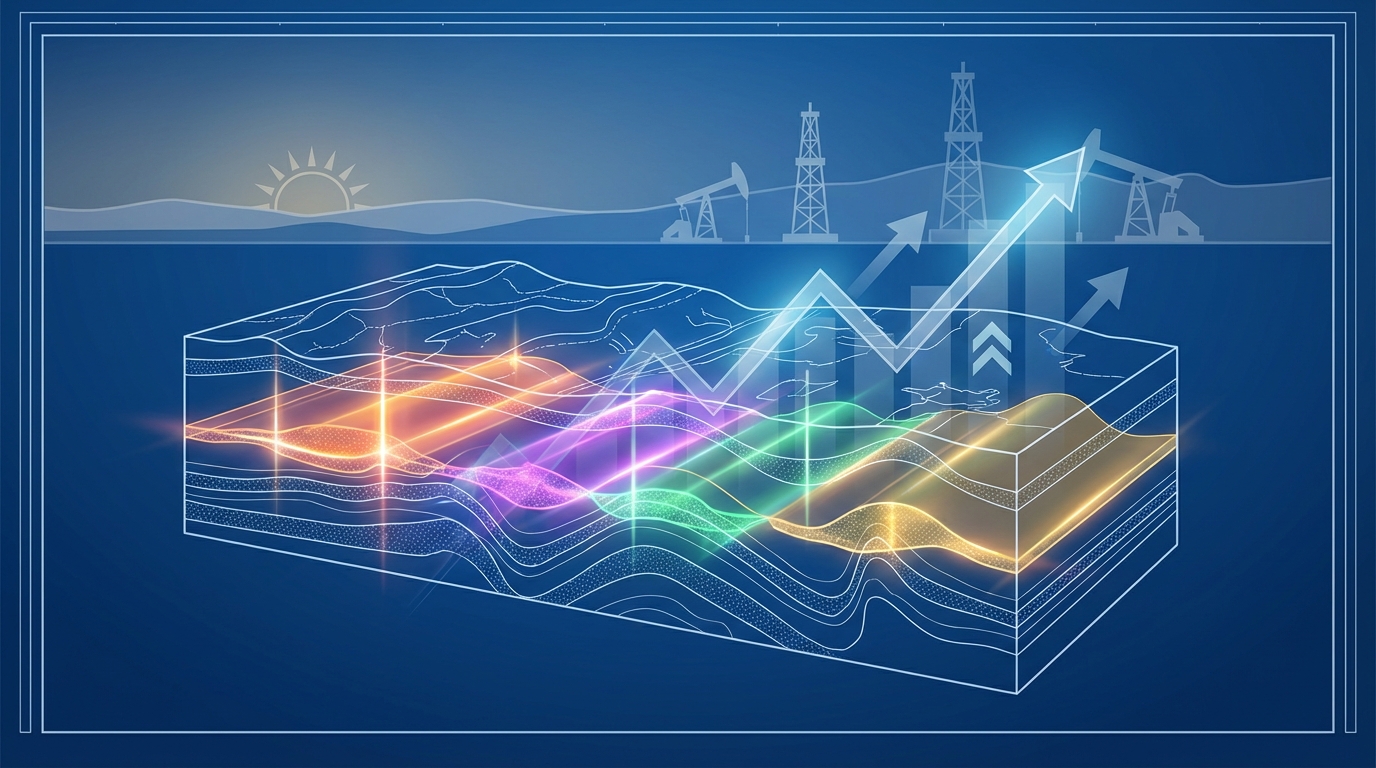
Many “we buy minerals” companies act like their pricing is a dark secret. We don’t operate that way. Here is exactly how we calculate what your minerals are worth.
1. Current Production (The “Base”)
We look at your last 3-6 months of check stubs. We apply a :Decline Curve to forecast how much oil that well will produce over the next 10+ years. All wells produce less over time, so we discount future cash flows.
We also factor in the :type curve for your specific area. A well in the Delaware Basin declines differently than one in the Eagle Ford.
2. Undeveloped Potential (The “Upside”)
This is where the real value lies. Do you own land where there are no wells yet, but operators are drilling nearby?
We analyze :permit filings and geological maps to estimate how many new wells could be drilled on your land. We look at:
- Active rigs within 2 miles
- Horizontal drilling targets in your formation
- The operator’s track record and acreage position
We pay you not just for what you have today, but for what you might have tomorrow.
3. Risk Adjustments
Not all potential is created equal. We discount for:
- :Held By Production (HBP) clauses that might keep land tied up
- Operators with a history of slow development
- Commodity price volatility
Our Commitment to Transparency
After we run our numbers, we’ll show you how we arrived at our offer. No black boxes, no games.
:decline-curve
Decline Curve Analysis. The engineering method used to predict the future drop in oil production from a well. All wells decline; understanding how fast is key to valuation. Most wells decline 60-80% in the first year.
:type-curve
A standardized production forecast for a typical well in a specific area. It’s based on historical data from similar wells and helps us estimate what a new well might produce.
:permit-filing
A public document filed with state regulators (like the Texas Railroad Commission) before drilling a new well. We monitor permit activity to identify where drilling is heading.
:hbp
Held By Production. A lease clause that keeps a lease active as long as there is production—even minimal production—from the land. This can lock up undeveloped acreage for years.