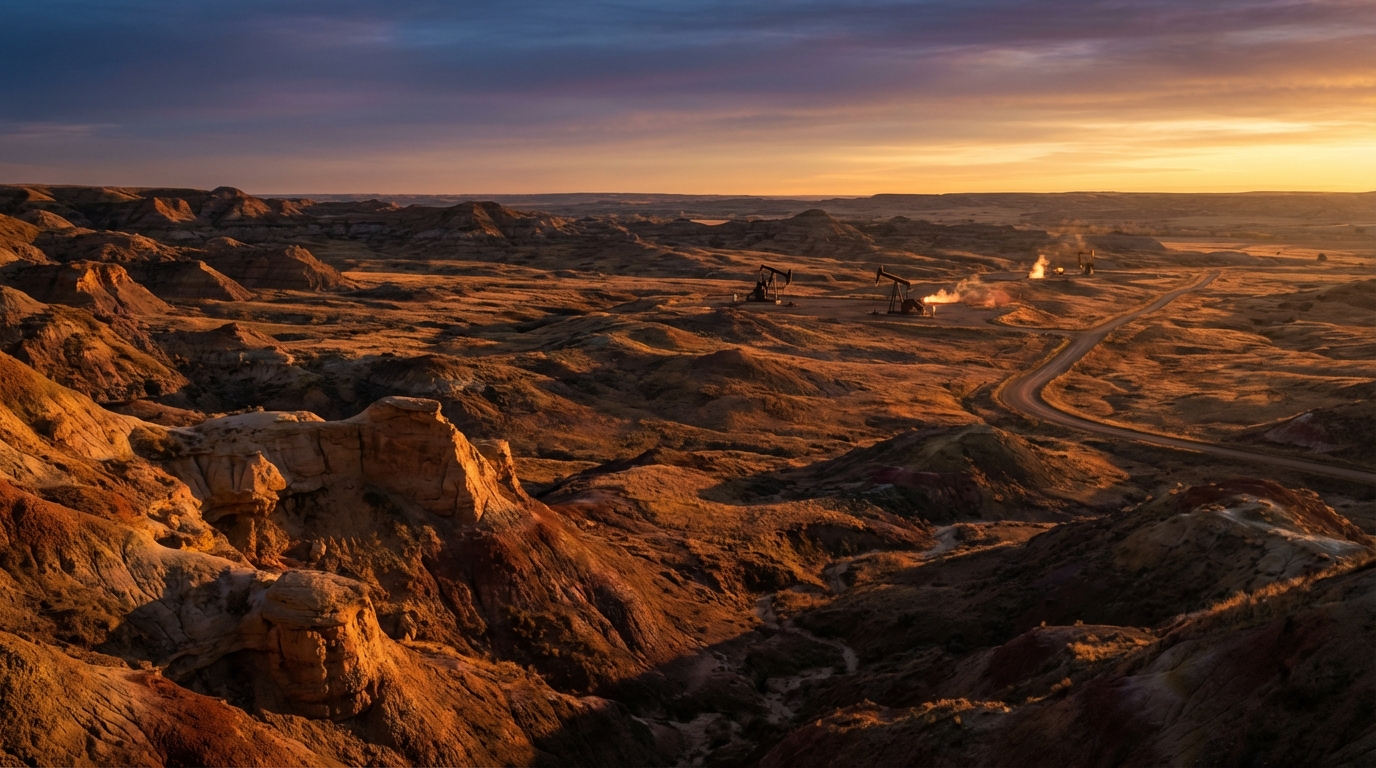
We spend a lot of time analyzing Texas deals, but we never ignore the North. Ten years ago, the :Bakken Shale was the Wild West. It was boom-or-bust, hotels were full, and offering prices were all over the map because nobody truly knew what the ground would yield. Today, North Dakota is different. It’s quieter. But for a mineral owner, “quiet” and “mature” can actually mean more money in the bank.
Here is why the current market is interesting for owners in counties like McKenzie, Williams, or Dunn. The geology is now a known quantity. Buyers aren’t guessing anymore; they know exactly what the rock does. When risk goes down, the willingness to pay for stable cash flow goes up. We are seeing :pricing multiples in the core of the Bakken that rival the best spots in Texas. The “speculative” money has left, but the “smart” money is doubling down on stability.
There is also the reality of the :decline curve. If you have owned minerals in North Dakota for a decade, you know the checks aren’t what they were in 2014. That is just physics—pressure drops, and oil flows slower. By selling now, you are effectively pulling twenty years of that slow, future trickle forward into a lump sum today. You are trading a shrinking monthly check for a substantial capital asset you can invest elsewhere.
We aren’t saying you have to sell. Many families want to hold that land forever, and we respect that. But if you have felt ignored because all the headlines are about the Permian, know that the checkbook is very much open for North Dakota right now. The market is stable, oil prices are healthy, and the buyers are aggressive. It might be worth running the numbers just to see what that stability is worth in real dollars.
:bakken-shale
A massive rock formation spanning parts of North Dakota and Montana. It was one of the first places where horizontal drilling and fracking really took off, turning the US into an energy superpower. It produces a high-quality, light oil that refineries love.
:pricing-multiples
This is back-of-the-napkin math for valuing minerals. If your royalties pay you $1,000 a month, and a buyer offers you $60,000, that’s a “60x multiple” (60 months of income). In mature areas like North Dakota, these multiples can get competitive because the income is seen as reliable.
:decline-curve
Every oil well produces the most oil on its very first day. After that, production drops—usually steeply at first, then leveling out. It’s the natural lifecycle of a well. Mineral owners need to understand this to realize that last year’s check size won’t stay the same forever.