Colorado isn’t Texas.
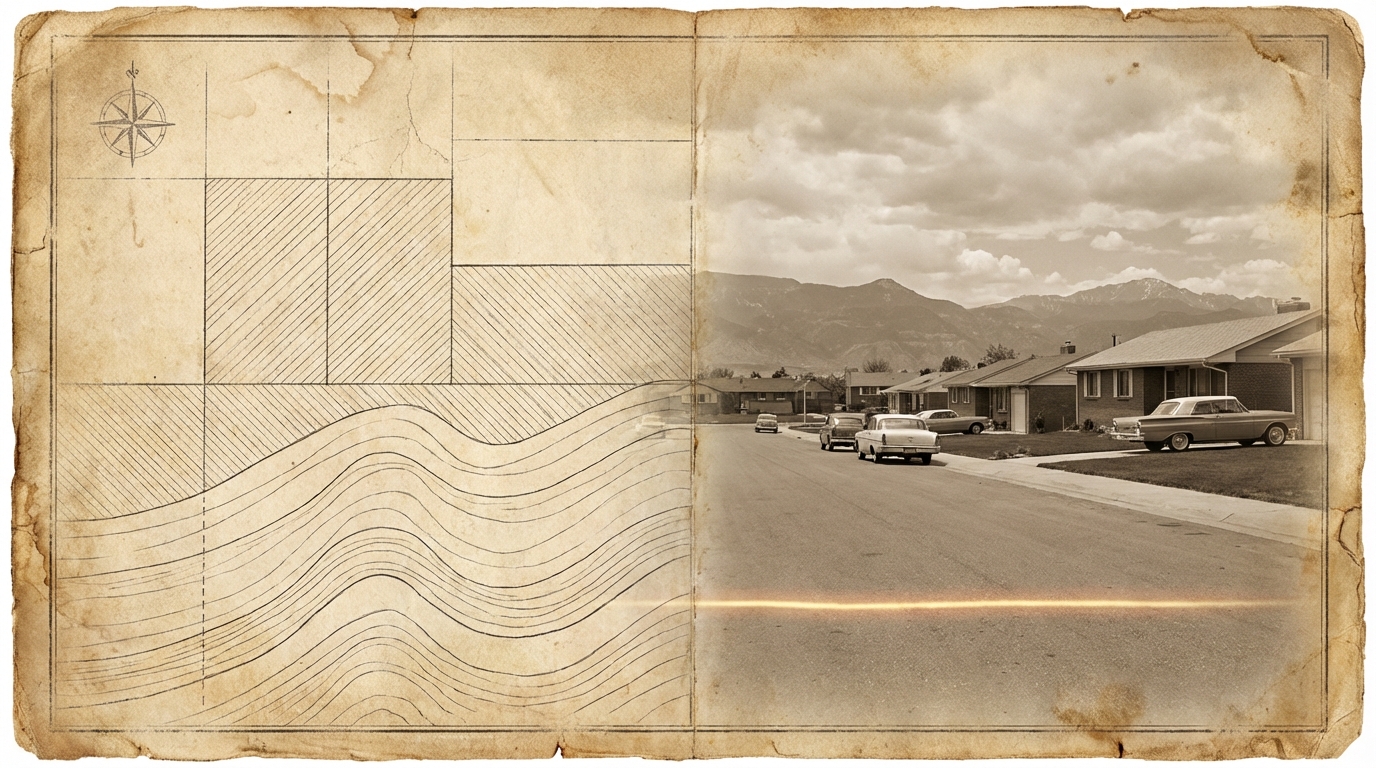
In Texas, we deal with vast ranches and clear sections. In Colorado—especially in the DJ Basin and areas like Weld County—we deal with neighborhoods. We deal with subdivisions plotted out in the 1970s, backyard setbacks, and complicated drilling plans that run thousands of feet horizontally beneath elementary schools and cul-de-sacs.
For years, a specific question has nagged at the back of the industry’s mind: Who owns the oil and gas underneath the street?
It sounds trivial. A road is maybe 40 or 50 feet wide. In the grand scheme of a 1,280-acre drilling unit, why does the dirt under “West 11th Street Road” matter?
It matters because in horizontal drilling, every inch of the lateral bore contributes to the royalty deck. And recently, the Colorado courts gave an answer that shifted money from developers back to homeowners.
If you own property in a Colorado subdivision, or if you inherited a small interest in Weld County, this affects you.
The “Great Northern” Case
Let’s look at a real story that unfolded in the Colorado Court of Appeals. It centers on a dispute between a developer (Great Northern Properties) and an oil company (Extraction Oil & Gas), but the real winners were regular homeowners.
Here is the simple version.
Back in 1974, a developer owned a big plot of land in Greeley. They subdivided it, drew up the map, and dedicated a strip of land to the city to build a road. They sold the lots next to the road to families.
Decades passed. The shale revolution happened. Suddenly, the minerals under that subdivision became valuable.
Great Northern Properties (the successor to the original developer) showed up and effectively said: “We sold the lots to the homeowners, and we gave the surface of the road to the city. But we never explicitly sold the minerals under the road. So, we still own that strip.”
They wanted the royalties for the oil produced from beneath the pavement.
This happens more often than you’d think. Developers from forty years ago come out of the woodwork to claim “strip minerals”—long, thin slivers of ownership that run through the middle of high-value drilling units.
The Centerline Presumption
The court disagreed with the developer. They applied a legal concept called the :Centerline Presumption.
The logic is surprisingly practical. The law assumes that when you sell a piece of land next to a road, you have no intention of keeping a useless strip of dirt underneath that road. So, unless the deed screams otherwise, the buyer of the lot also buys the minerals underneath the street, all the way to the middle line.
The court ruled that the mineral rights under the road belonged to the abutting landowners—the homeowners—not the developer who laid out the subdivision fifty years ago.
Why This Matters to You
You might be thinking, “I own a house on a quarter-acre lot. Half the street is tiny. Is this worth my time?”
In isolation? Maybe not. But mineral ownership in Colorado is rarely about isolation anymore. It’s about aggregation.
When an operator like Extraction (or Occidental, or Chevron) drills a two-mile horizontal well, they are pooling together hundreds of tiny tracts. If you own the minerals under your driveway, your backyard, and half the street, your “net mineral acres” just increased.
We see this constantly in our office. A family thinks they own 0.15 net mineral acres. After we run the title and apply the centerline presumption, they actually own 0.18.
That difference looks small on paper. Over the life of a high-producing well in the core of the DJ Basin, that difference can mean thousands of dollars.
The “Quiet Title” Problem
There is a catch. There is always a catch.
Just because the court ruled this way doesn’t mean the oil company automatically sends you a check. Title in Colorado is messy.
In the Great Northern case, the oil company knew they had to pay someone royalties for the oil under the road. But until a judge signed a piece of paper, they couldn’t be sure if it was the developer or the homeowners.
To fix this, someone has to file a :Quiet Title Action. This is a lawsuit solely designed to clear up the paperwork.
The problem? Lawyers are expensive. If your potential royalties are $5,000, you cannot spend $10,000 on a lawyer to quiet the title. This leaves many Colorado owners in a state of “suspended payments.” The oil company holds the money in suspense because the ownership is too murky to pay out safely.
The Hidden Value of “Strips”
We look at deals differently than most buyers. Many corporate mineral buyers run an algorithm. If your name isn’t perfectly clear on the tax rolls, they skip you. They want the “clean” 640-acre sections in West Texas.
We actually like the mess.
We understand the Great Northern ruling. We know that if a family owns a row of lots along a county road in a high-activity area, they likely own the minerals under that road too. We are willing to do the heavy lifting—paying for the legal work to clean up the title—because we know the value is there.
This creates an opportunity for owners who have been told their interest is “too small” or “too complicated.”
Practical Steps for Colorado Owners
If you own minerals in a subdivided area of Colorado, or if you suspect you might:
- Check Your Deed: Look at the language when you (or your parents) bought the property. Does it specifically exclude minerals? If it’s silent, and the seller owned them, you likely own them.
- Don’t Ignore “Road” Minerals: If you are negotiating a lease, make sure the description includes adjacent easements and rights-of-way. Don’t let the operator lease your lot but leave out the street acreage.
- Watch for “Force Pooling”: Colorado uses statutory pooling (often called :Forced Pooling). If you don’t lease, and the operator controls enough of the surrounding area, they can drill anyway. You still get paid, but the economics change. You need to pay attention to notices from the COGCC (now the ECMC).
A Valid Option
I won’t tell you that you need to sell. For some families, holding these tiny interests and collecting the checks—even if they are sporadic—is the right move. It connects you to the land.
But I will say that managing fractional interests in Colorado is getting harder, not easier. The legal fees to prove you own the minerals under the street often cost more than the minerals are worth.
This is where selling becomes a valid financial tool. When you sell to a group like ours, we take on the risk. We pay the lawyers to fight the “Great Northern” style battles. You get a lump sum based on the fair value of the minerals—including the strip under the road—without having to go to court to prove it’s yours.
The Great Northern case was a win for the little guy. It confirmed that developers can’t hoard rights they should have passed on. But it also highlighted just how complex property rights have become in the Rockies.
If you have paperwork collecting dust, or if you’ve received a pooling notice that makes no sense, it might be worth a conversation. We can look at the map, look at the road, and tell you what you actually own.
:centerline-presumption
A legal rule used by courts to decide ownership of strips of land under roads or easements. It assumes that when a person sells land bordering a public road, they also intend to sell the land underneath the road up to the center line. This rule prevents “orphan” strips of mineral ownership that create legal nightmares years later.
:quiet-title
A specific type of lawsuit used to establish a party’s title to real property against anyone and everyone, and thus “quiet” any challenges or claims to the title. It’s essentially a judge banging a gavel and saying, “Okay, we’ve looked at all the evidence, and Person A is the definitive owner.”
:forced-pooling
Also known as Statutory Pooling. In Colorado, if an oil operator leases a certain percentage of minerals in a drilling unit, they can apply to the state to “pool” the remaining unleased owners. This ensures that one person refusing to sign a lease can’t stop a well that benefits everyone else. If you are pooled, you still own your minerals, but the state dictates how and when you get paid.