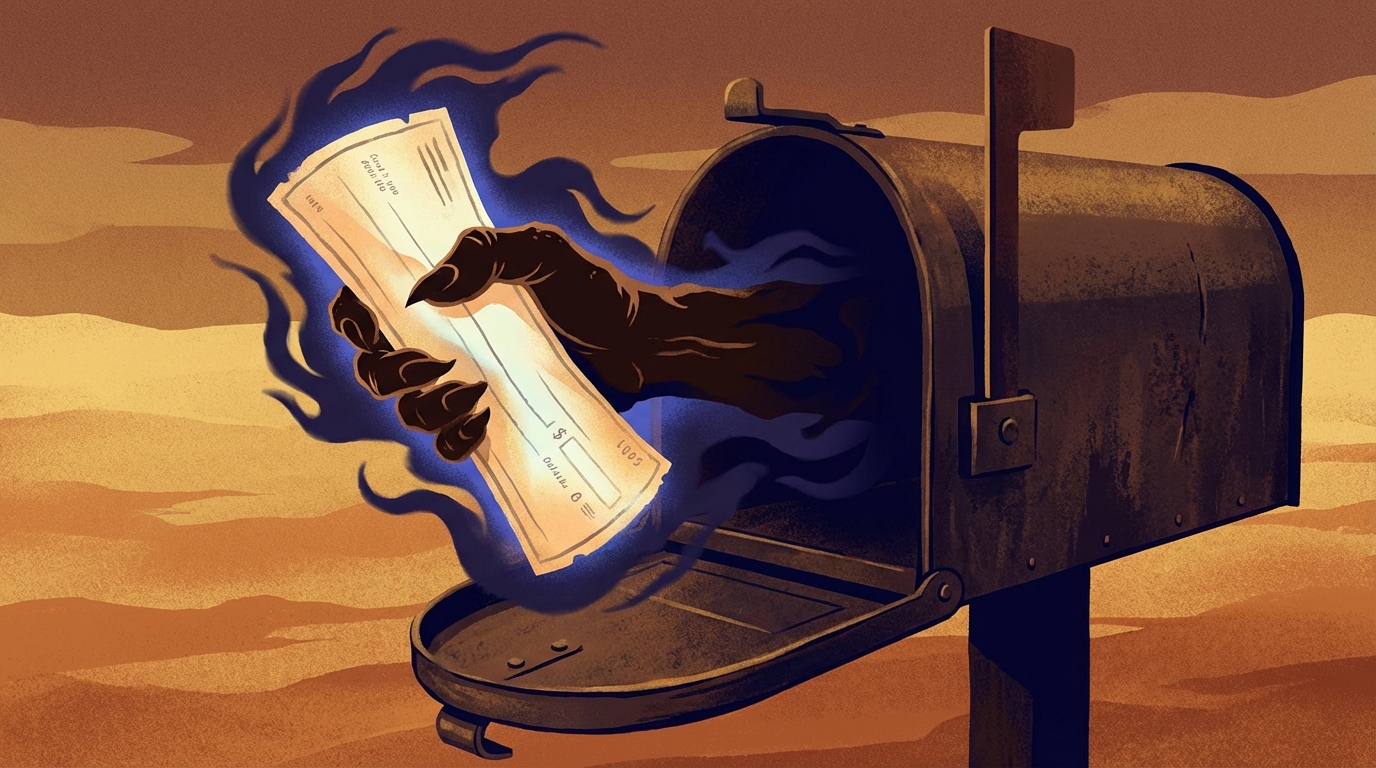
You open the mailbox and see an envelope from a company you’ve never heard of. Inside, there’s a check for $45,000. It looks like a winning lottery ticket. Your name is on it, the amount is enticing, and the letter says all you have to do is sign the back and deposit it to sell your mineral rights.
Don’t spend that money yet.
That piece of paper likely isn’t a standard check; it’s a :Bank Draft. This is one of the oldest, dirtiest tricks in the landman’s playbook. When you sign and deposit that draft, you aren’t actually getting paid immediately. You are essentially giving that company an option to buy your property for free. They lock you down for 30, 60, or even 90 days while they run :Title Due Diligence.
If they find something they don’t like—or if the price of oil drops next week—they can simply decline to honor the draft. The bank claws the money back (if they even credited it temporarily), and you’re left with zero dollars and months of wasted time. Meanwhile, you were legally blocked from selling to a serious buyer who actually had the funds ready.
At Double Fraction, we don’t send cold checks. We believe in doing business face-to-face (or at least voice-to-voice). Real deals are done with a :PSA that protects both the buyer and the seller. If we make an offer, we put it in writing with clear terms, not a gimmick that exploits the banking system. If you get a “check” in the mail from a stranger, put it in the shredder.
:bank-draft
A financial instrument that looks like a check but functions differently. Unlike a check, which draws on existing funds immediately, a bank draft is often a “collection item” that requires the buyer to authorize payment after you deposit it. In the mineral business, it’s often used to tie up a seller’s interest without the buyer committing actual capital.
:due-diligence
The period during which a buyer researches the ownership history of a property to ensure the seller actually owns what they claim to own. This involves digging through county courthouse records to verify clear title.
:psa
Short for Purchase and Sale Agreement. This is a formal contract outlining the price, closing date, and terms of the sale. A PSA protects the seller by setting a hard deadline for the buyer to pay up or release the property.