
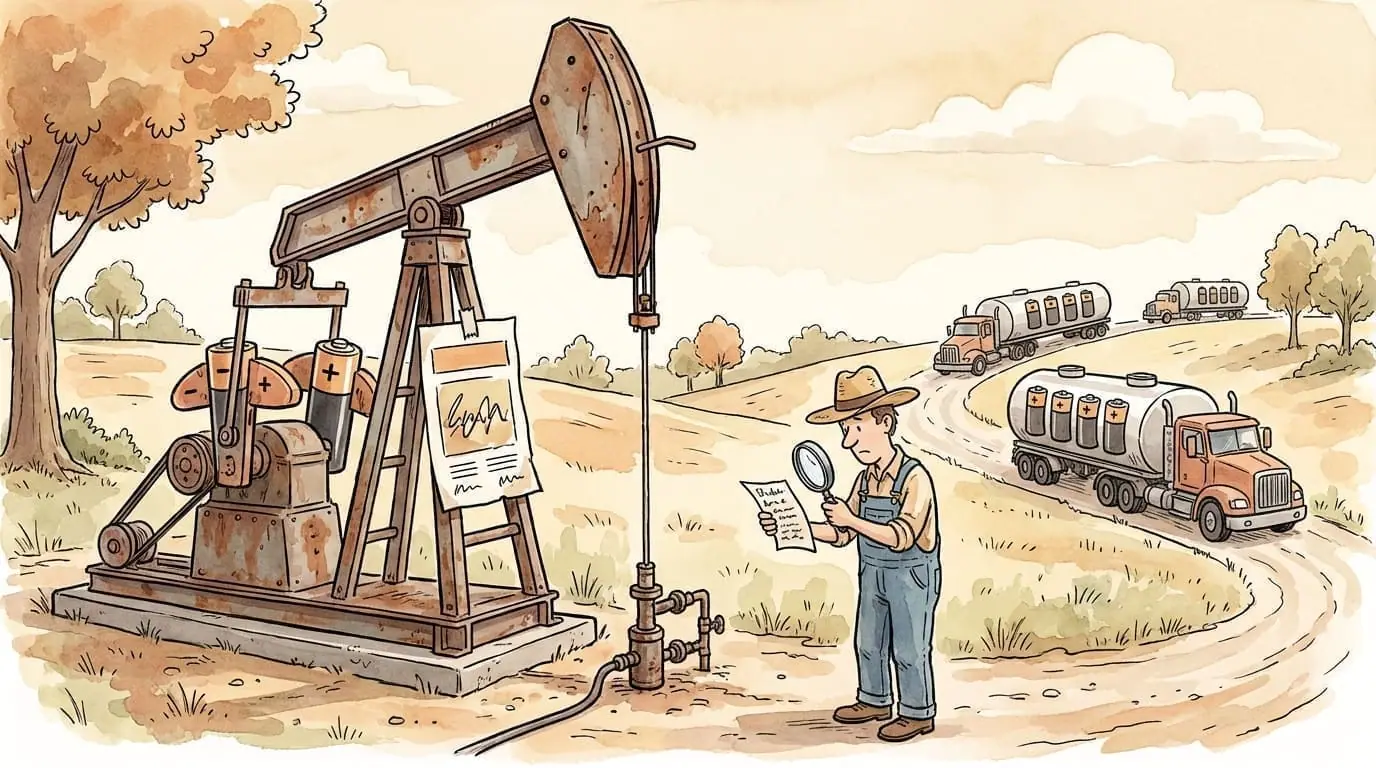
Most folks with family land in southern Arkansas grew up knowing their property sat on top of oil. They also knew that pulling that oil out of the ground brought up a massive amount of incredibly salty water. For decades, that saltwater was just a nuisance. You had to dispose of it. Then chemical companies realized they could extract bromine from it.
Now the narrative has shifted completely. The battery industry wants that saltwater.
Arkansas has suddenly become the most interesting mineral rights state in the country. The old brine fields in the :Smackover Formation are being repriced. They are no longer just wastewater infrastructure or low-margin bromine plays. They are massive lithium assets.
We talk to families every week who are trying to figure out what this means for their inheritance. They get letters in the mail offering to lease their brine rights. They see news articles about billion-dollar battery plants. They naturally wonder if they are sitting on a winning lottery ticket.
The honest answer is complicated. The headline numbers sound huge. The actual math on the royalty check tells a very different story.
The AOGC Makes a Choice
In late May 2025, the rules of the game became a lot clearer. The Arkansas Oil and Gas Commission voted to approve a 2.5% royalty on lithium extracted from brine.
This specific ruling applied to SWA Lithium. That is a joint venture between Canada-based Standard Lithium and the Norwegian energy giant Equinor. The decision specifically covers the Reynolds Unit across Columbia and Lafayette Counties.
This did not happen quietly. The commission had previously rejected other royalty applications. Landowners and mineral owner associations pushed back hard. At the hearing, local mineral owner Joshua Gaines argued against corporate greed and asked for a fair share for the little guy. Emon Mahony from the South Arkansas Minerals Association warned the commission that operators were purposefully low-balling their numbers.
The commission approved the 2.5% rate anyway. They pointed out that they had to look at the broader economic picture. An approved royalty rate brings massive commercial facilities closer to reality. That means severance taxes for local schools, jobs for residents, and money for local businesses. Commissioner Jim Phillips noted that he felt immense pressure from all sides to get the decision right.
The Math Behind the 2.5% Rate
If you are used to traditional oil and gas leases, a 2.5% royalty sounds insulting. Standard oil royalties usually range from 12.5% up to 25%. You might wonder how a company can get away with paying so little for a highly valuable battery metal.
You have to look at how the lithium is actually harvested.
Oil naturally wants to come out of the ground. You drill a hole, manage the pressure, and collect the hydrocarbons. Extracting lithium from brine requires a highly complex industrial process called :Direct Lithium Extraction. Standard Lithium estimates that building out the full-fledged South West Arkansas project will cost upwards of a billion dollars.
They are not just drilling a well. They are building a massive chemical manufacturing plant. The sheer amount of capital required to build and operate these facilities is why the royalty rate is set so much lower than crude oil.
To be completely accurate, the 2.5% lithium royalty is just one piece of the compensation. The Department of Energy and Environment notes that landowners will also receive the standard brine fee. This is an “in lieu bromine royalty” set at $65.05 per acre per year. When you combine the annual acre fee with the 2.5% lithium royalty, the companies estimate the total compensation is closer to 3% based on current lithium prices.
The Denominator Problem
Here is where the math gets very sobering for the average family.
Let us say you own 40 net acres of brine rights inside the Reynolds Unit. You hear about a 2.5% royalty and start doing back-of-the-napkin math based on global lithium prices. You might be setting yourself up for a massive disappointment.
You have to understand how :brine unitization works. We have written about understanding the difference between net and gross minerals before, but brine takes this to an extreme level.
Unlike oil and gas which can be drained by a few wells on a 640-acre spacing unit, brine operations require circulating massive volumes of water across vast distances. You pull the water up, strip the minerals out, and inject the water back into the formation. Because the brine is highly migratory, legal experts note that brine unitization requires consolidating thousands of acres to protect correlative rights and manage the reservoir pressure.
The Reynolds Unit encompasses more than 20,000 acres.
Your royalty is determined by your fractional share of that entire unit. You take your 40 net acres and divide it by the 20,000 total acres in the unit. That gives you your unit decimal.
40 divided by 20,000 is 0.002.
You own two tenths of one percent of the unit. You then multiply that tiny fraction by the 2.5% royalty rate (0.025). Your actual decimal interest on a check stub would be 0.00005.
When the operator sells a million dollars worth of lithium carbonate, your share before taxes is $50.
This denominator effect is exactly why understanding your division order is so essential. We see families get boxed into massive units all the time. The operator gets a headline-grabbing win, the state gets an economic boom, and the individual mineral owner gets a check that barely covers a trip to the grocery store. This is the reality of how amended and massive units dictate your payout.
The Waiting Game
There is another massive factor that mineral owners need to consider. Timing.
Standard Lithium and Equinor have the royalty rate approved. They have federal grant money. But they are not pumping commercial lithium yet. According to their own announcements, the SWA Project has a planned production capacity of 22,500 tonnes per year once in full commercial production, which is expected in 2028.
Three years is a long time in the energy sector.
Lithium prices are notoriously volatile. They soar when electric vehicle demand outpaces battery supply. They crash when new supply floods the market or when automakers scale back their EV targets. The operators still have to secure hundreds of millions of dollars in financing to finish building the facility.
If you sign a lease today, you are tying your family to a project that might not generate a royalty check until the end of the decade. And that assumes everything goes perfectly according to plan.
Why Families Ask for Valuations
We sit across the table from people trying to navigate these exact situations. It is completely overwhelming. You have a piece of paper telling you your family land is part of the clean energy transition. You have neighbors arguing about corporate greed. You have a confusing lease offer with terms that look nothing like your grandfather’s old oil leases.
Deciding what to do with family land is heavy. There is history tied up in that dirt.
Some families want to ride it out. They are comfortable waiting until 2028 to see if the billion-dollar plant gets built. They do not mind having a fractional decimal in a 20,000-acre unit because they view it as passive upside. That is a perfectly valid choice.
Other families look at the math and the timeline and make a different choice. They realize that getting a lump sum today might pay off a mortgage, fund a grandchild’s college tuition, or simply remove the headache of tracking volatile commodity markets for the next ten years. They decide to sell a portion of their rights to diversify their risk, or they sell the whole thing to close out an estate.
There is no universally right answer. There is only the right answer for your specific situation.
But you cannot make a good decision if you do not know the actual math. Hoping for a massive payday based on a misunderstanding of unit sizes and capital costs is a recipe for regret.
Knowing exactly what you own and what it is currently worth in the open market is empowering. It cuts through the noise of commission hearings and press releases. Even if you have absolutely no intention of selling today, having a clear valuation gives you peace of mind. It allows you to file the paperwork away knowing you understand your options.
If you own brine rights in Arkansas and want to look at the real math behind your acreage, it is always worth a conversation. At the very least, you should know exactly what your options are before the units are finalized and the bulldozers show up.
:smackover-formation
A geologic formation stretching across the Gulf Coast, known historically for prolific oil and gas production. In southern Arkansas, the Smackover contains massive underground reservoirs of porous limestone filled with brine. This brine is incredibly rich in dissolved minerals, making it a primary target for commercial bromine and lithium extraction.
:dle
Direct Lithium Extraction (DLE) is a set of technologies used to filter lithium out of brine water. Instead of pumping saltwater into massive evaporation ponds and waiting months for the sun to do the work, DLE uses chemical filters or beads to grab the lithium molecules directly. The processed water is then reinjected back into the earth, making it much faster and requiring a significantly smaller physical footprint.
:brine-unitization
The legal and regulatory process of combining multiple tracts of land into one massive production area specifically for saltwater extraction. Because brine moves freely across vast underground distances, operators cannot extract it from a small 40-acre square without draining their neighbors. States force these lands to be pooled together, often creating units that cover tens of thousands of acres, which significantly dilutes the payout for individual property owners.