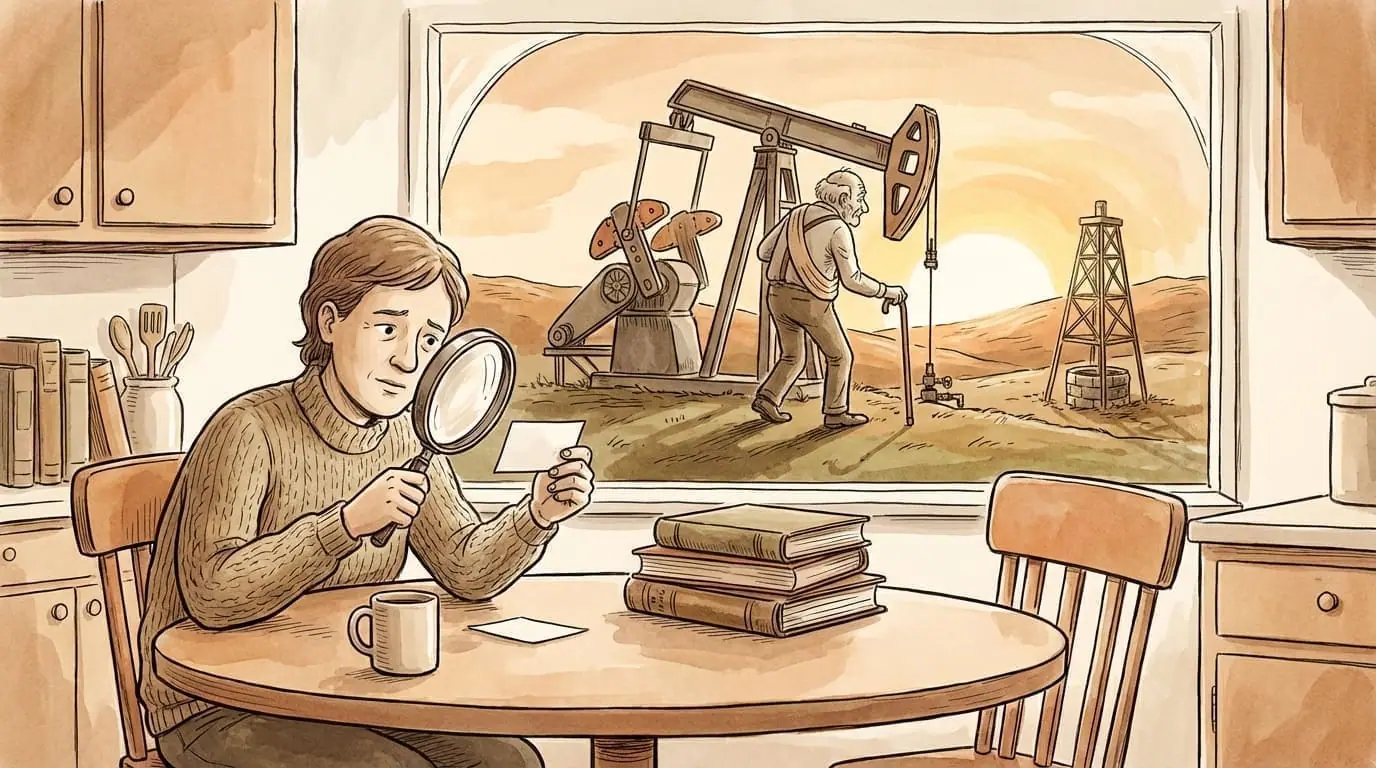
Most people remember the first royalty check they got from a new well. It is usually the biggest one you will ever see. A few years later, that number shrinks. I have sat at kitchen tables with families who suspect the oil company is cheating them because the monthly checks got so small. The truth is just geology. Oil and gas wells run out of pressure. We touched on this math in Why Your Royalty Check Just Shrank, but let us look at what actually happens at the end of a well’s life.
Every well follows a predictable :decline curve. The massive flush production in year one drops fast. By year five or ten, the well hits what engineers call :terminal decline. It might pump a steady trickle of oil for decades. The well is not broken. It is just old. This natural life cycle is the core difference between Producing vs. Non-Producing Minerals. Every well eventually trends toward zero.
When a well barely produces enough to pay its own electricity bill, the operator makes a choice. They might keep it pumping just enough to hold your lease active. We wrote about The “Zombie Lease” Problem because we see this tactic happen constantly in Texas. Or they might leave the well :shut-in for months at a time. For you, the mailbox gets quiet. You still own the rights below the dirt, but the income stream dries up.
This transition is hard. A property that used to pay for college tuition might now barely buy a nice dinner once a year. That forces a shift in how you manage your assets. You have to ask if tracking the paperwork and filing the taxes is still worth the headache for a few dollars. Many families hold on for sentimental reasons. That makes total sense. Family land carries weight.
But others look at an aging well and decide they would rather have a lump sum now than watch a check shrink to pennies. There is no right answer for every family. Getting a clear valuation on older production gives you a realistic picture of what those remaining reserves are actually worth. Even if you decide to keep the minerals, it always helps to know your options.
Distinguish Decline, Downtime and Final Abandonment
A smaller check does not by itself prove depletion. Compare the operator statement with the state production record for the same sales month. If both volume and payment fall gradually, reservoir decline may be the main cause. If reported volume suddenly reaches zero, investigate maintenance, offset-fracture protection, pipeline interruption, mechanical work or a reporting lag before assuming the well is finished.
A shut-in well is different from a plugged well. Shut-in status can be temporary, and lease language may allow the operator to maintain rights through shut-in payments or other savings clauses. Plugging closes the wellbore under the regulator’s rules, but it still may not answer whether other wells or depths hold the lease. Review the lease, unit and regulatory record together.
For planning, build a table of monthly oil, gas, realized price, decimal, taxes and deductions. Use enough history to see the trend and isolate unusual adjustments. Forecast a range rather than extending the latest check in a straight line. The late-life tail can last years, but small volumes, operating costs and commodity prices can make timing uncertain.
Also monitor operator changes and suspense. A sale of the well, ownership transfer or title question can interrupt payments without changing physical production. Keep the recorded deed, division order and current address on file with owner relations. Ask for a written explanation when a previously paying account enters suspense.
At the end of one well’s life, the mineral estate does not normally disappear. Additional formations, replacement wells or future leases may retain value, depending on title and existing lease terms. Do not value an entire tract solely from the last producing well or sign a broad deed because one check became small.
When comparing continued ownership with a sale, model the existing decline separately from speculative future drilling. A buyer should identify what value it assigns to current production, undeveloped locations and title risk. That separation makes the decision understandable and prevents a low terminal-month check from anchoring the value of every remaining right.
:decline-curve
The mathematical path a well’s production takes over time. Oil and gas wells produce their highest volumes immediately after being completed, followed by a steep drop in production before leveling out.
:terminal-decline
The late stage of a well’s life where production drops at a very slow, flat rate. The well might produce just a few barrels a day, but it can maintain that tiny output for many years.
:shut-in
A status where a well is capable of producing oil or gas but has been temporarily closed off by the operator. This usually happens when oil prices drop too low to justify operating costs or when pipelines are full.