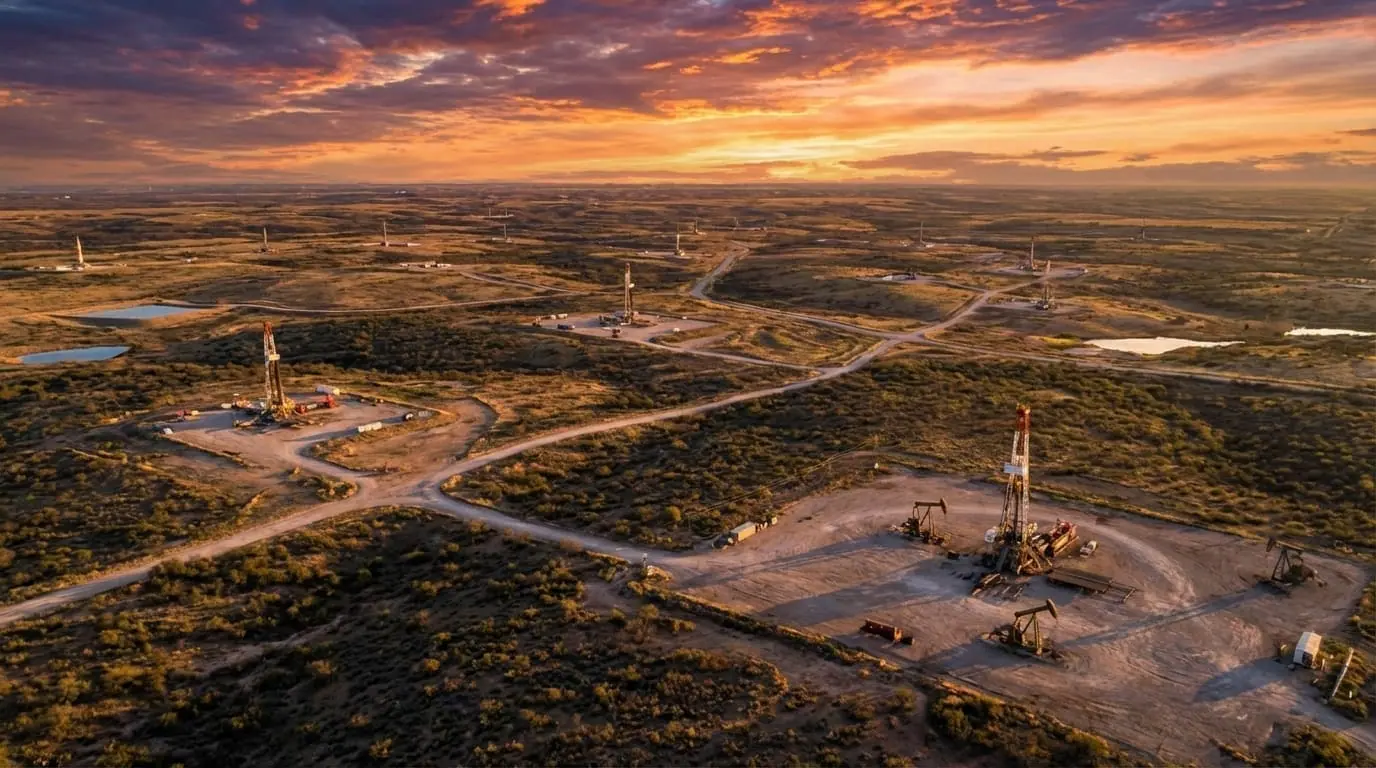
The :Permian Basin is the engine of American energy independence. Spanning West Texas and New Mexico, this super-basin has defied skeptics for a decade.
The “Tier 1” Scramble
Operators are running out of :Tier 1 inventory—the absolute best rock. This means they are fighting harder to acquire acreage in core counties like Midland, Martin, Reeves, and Loving.
The result? Bidding wars. Companies are paying premium prices for minerals in the core, because the alternative—drilling marginal acreage—yields worse returns.
The Delaware vs. Midland Basin Debate
The Permian is actually two stacked basins:
:Delaware Basin — Deeper, more complex, but with thicker pay zones. Think Reeves and Loving counties.
:Midland Basin — Shallower, more established, lower drilling costs. Think Midland and Martin counties.
Both are world-class. But if you own in one vs. the other, the operator interest and valuation multiples differ.
What This Means for Owners
If you own minerals in these core counties, demand is at an all-time high. Even as the :rig count fluctuates with oil prices, the long-term value of Permian rock is secure.
However, fringe areas are seeing less activity as companies focus on efficiency. If you’re on the edges of the basin, your minerals may take longer to develop.
Looking Ahead
The Permian isn’t going anywhere. With an estimated 50+ years of remaining inventory and continued efficiency gains, West Texas will remain the center of American oil production for decades.
If you are unsure if your land is “Core” or “Fringe,” request a free evaluation from our team. We track rig movements daily.
Put the Basin Story in Context
Regional headlines do not establish the value of one tract. Start with our Texas mineral-rights guide or New Mexico mineral-rights guide, then compare the legal description, operator, producing zones, nearby permits, lease royalty and title burdens. Our mineral-rights valuation guide explains why two interests in the same county can produce very different offers.
What to Measure Instead of Repeating the Headline
“Permian” is too broad to be a valuation conclusion. A useful review begins with the exact section, block, survey or township-range-section, then identifies the producing formation and the lateral’s relationship to the tract. The Midland and Delaware sub-basins contain multiple benches, and an operator’s economic inventory can vary by formation even inside the same drilling unit.
For a producing interest, collect at least twelve months of statements and compare four separate lines: oil volume, gas volume, realized price and deductions. A falling check can come from decline, commodity price, downtime, a changed division-order decimal or a new deduction. Those causes have different implications. A buyer should not collapse all of them into one generic “Permian multiple.”
For a non-producing interest, review permits and completions without treating either as a promised well. A permit can expire, change hands or never be drilled. Nearby production is relevant only after accounting for distance, formation, lateral orientation and the operator’s actual development pattern. Public data helps frame probability; it does not guarantee timing.
Lease terms also matter. A higher royalty fraction, depth severance, Pugh clause, post-production-cost language and pooling authority can materially change the cash flow attached to identical acreage. Confirm whether the interest is leased, which depths are held and whether one old well is holding a much larger tract.
Finally, separate gross acres from net mineral acres and net royalty acres. County-level “per acre” talk is usually meaningless until the ownership fraction and lease burden are known. If an offer is based on acreage, ask the buyer to state the net acreage and royalty assumption in writing. That makes competing offers comparable and exposes a valuation built on the wrong tract or fraction.
The durable Permian thesis is not that every acre will be drilled soon. It is that a deep public record exists for testing location, production and development probability. Use that record, the lease and the title chain together—and date every market assumption—before deciding to hold, lease or sell.
Revisit that file whenever a new permit, completion, assignment or division order appears. A valuation is a dated judgment, not a permanent county price.
:permian
The Permian Basin—a roughly 75,000 square mile region spanning West Texas and Southeast New Mexico. It produces more oil than most countries.
:tier-1
Tier 1 Inventory. The best drilling locations with the highest estimated returns. These wells pay for themselves quickly and generate the most profit. Every operator wants more Tier 1 locations.
:delaware
The Delaware Basin is the western sub-basin of the Permian. It’s known for thick, stacked pay zones (Bone Spring, Wolfcamp) but requires deeper, more expensive wells.
:midland-basin
The Midland Basin is the eastern sub-basin of the Permian. Shallower and more developed, it offers lower drilling costs but sometimes thinner pay zones.
:rig-count
The number of active drilling rigs in a region. A rising rig count signals increased activity; a falling count suggests operators are pulling back.