I have sat across the kitchen table from plenty of mineral owners who proudly tell me they threw an operator’s lease offer straight in the trash.
They usually smile when they say it. They think doing nothing is a power move. The logic seems sound on the surface: you own the property, so an oil company cannot drill under your land without your permission. You hold the cards. If they want the gas, they have to meet your price.
If you own minerals in Texas, that logic holds up fairly well. But if you own minerals in Mississippi, I have some difficult news.
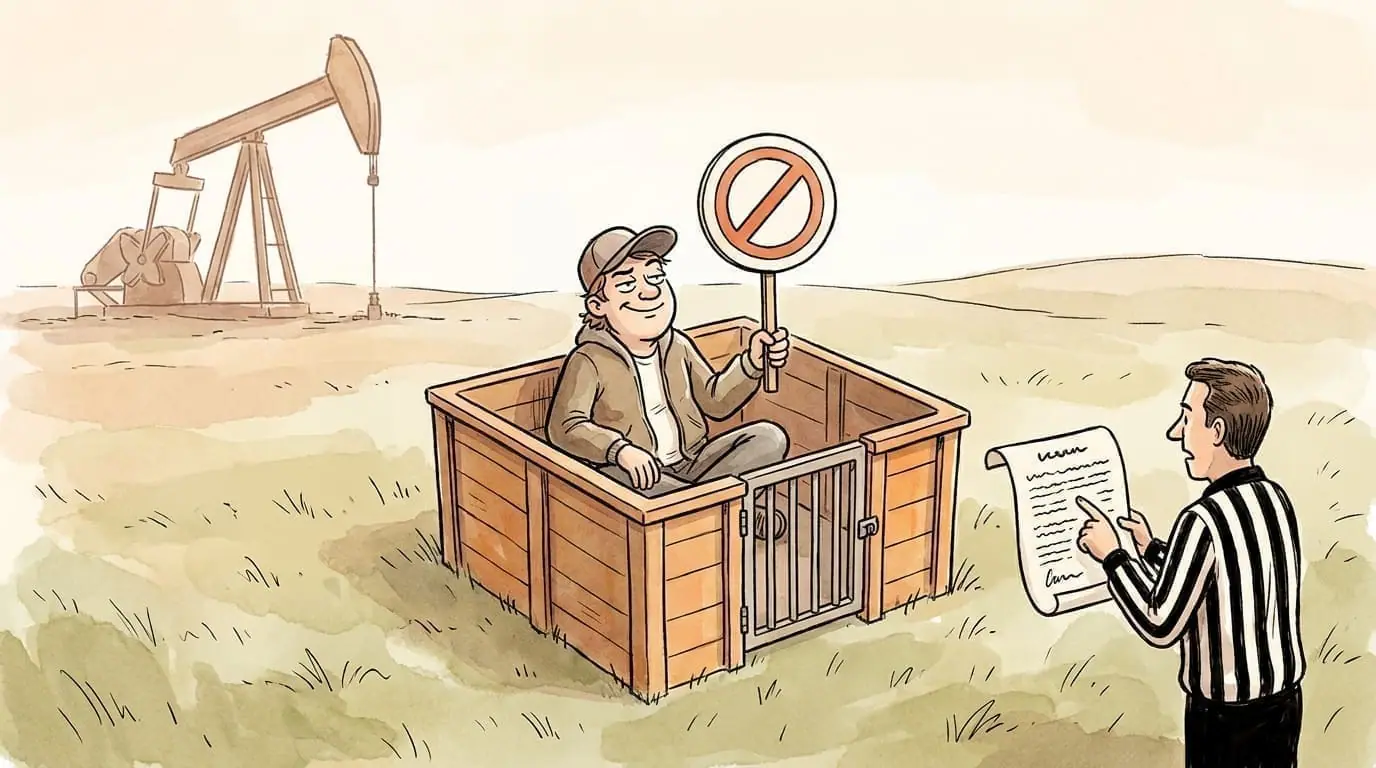
Saying “no” does not preserve your leverage. It just hands the operator a different set of legal tools. Instead of negotiating with you, they can simply ask the state to force you into the drilling unit. And once that happens, you do not just lose your negotiating power. You get thrown into a financial penalty box that can entirely erase the value of your minerals for years.
Let’s look at how Mississippi’s forced pooling laws actually work, the math behind the penalties, and what you can do to protect your family’s assets.
The 33 Percent Rule
Most people assume an oil company needs a vast majority of the landowners in an area to agree before they can bring in a rig. The reality in Mississippi is shockingly different.
Under Mississippi Code Section 53-3-7, an operator only needs 33% of the drilling rights in a proposed unit to voluntarily consent.
Let that sink in. They do not need half. They only need one-third.
If an operator wants to establish a standard 640-acre :drilling unit, they only need to secure leases for about 211 acres. They might get that by leasing a single large farm. Once they hit that 33% threshold, the remaining 67% of the mineral owners are suddenly highly vulnerable. The operator now has the legal right to petition the State Oil and Gas Board to force the integration of the remaining interests.
We see variations of this across the country. We previously broke down how Oklahoma pooling orders make your decisions for you in a similar way. But Mississippi’s 33% bar is incredibly low. It is designed to make it easy for operators to get wells drilled.
The “Good Faith” Checklist
The operator cannot just run to the state board the moment they hit 33%. They do have to jump through a few hoops first. The law requires them to make a “good faith effort” to bring you on board voluntarily.
According to the statute, this means they must:
- Try to negotiate with you to voluntarily integrate your interest.
- Give you the names of everyone who has already agreed to the unit.
- Try to find your actual address.
- Send you a written notice specifying the location, proposed depth, objective formation, and the estimated cost of the well.
- Offer you a chance to lease on “reasonable terms” or participate in the cost of the well.
This usually comes in the form of a thick packet sent via certified mail. I know exactly how intimidating these packets look. They are full of legalese, geological terms, and dollar amounts that look like phone numbers.
Many families receive this packet, get overwhelmed, and shove it in a drawer. They assume if they do not sign, nothing happens.
But doing nothing triggers the next phase. The operator will file a petition with the Oil and Gas Board. The Board will schedule a hearing. They will mail you a notice giving you 30 days to appear. If the operator cannot find your current address, they will simply publish a notice in a local county newspaper for three weeks.
If you live out of state, you will never see that newspaper. The hearing will happen without you. The board will issue an order. You are now officially a “nonconsenting owner.”
This exact dynamic of missing owners losing out is common. We discussed a very similar problem in our piece on Illinois’ “Missing Owner” Trap. When you are invisible or unresponsive, the system processes you automatically.
Why the State Allows This
You might be asking how this is legal in America. How can a private company take your minerals without your signature?
The answer lies in the fundamental policy of the state. Mississippi Code Section 53-1-1 makes it clear. The state has a vested public interest in fostering, encouraging, and promoting the production of oil and gas. Their primary legal goal is to prevent “waste” and protect the coequal rights of owners in a common pool.
In plain English: the state views oil and gas as a massive economic engine. They generate tax revenue, create jobs, and fund public infrastructure. The state will not allow one stubborn family to kill a multi-million dollar drilling project that benefits the local economy and the other 33% of owners who actually want the well drilled.
They view pooling as a way to ensure the resources get out of the ground. Your individual right to say no is overridden by the state’s desire to see the drill bit turn.
The Penalty Box Math
This is where the reality of forced pooling gets ugly.
When you are forced into a unit against your will, you might assume you just get a standard royalty check later on. After all, they are taking your oil. You should get paid for it, right?
Not quite. Because you refused to lease and refused to front the cash to drill the well, you took zero financial risk. The operator took all the risk. The state believes the operator should be heavily compensated for carrying your dead weight.
Your share of the oil and gas production is intercepted before it ever reaches your mailbox. The operator uses your oil to pay back your hypothetical share of the drilling and operating costs.
But they do not just take back 100% of the costs. They hit you with a statutory penalty.
In Mississippi, the operator can petition for alternate charges that heavily penalize nonconsenting owners. This penalty can reach up to 300% on the costs of drilling, completing, and equipping the well.
Let’s look at the actual math.
Imagine a new well costs $10 million to drill and complete. Based on your acreage, your proportionate share of the unit is 1%. That means your share of the drilling cost is $100,000.
Because you are a nonconsenting owner subject to a 300% penalty, the operator does not just recover $100,000 from your oil. They recover $400,000 ($100,000 for the cost + $300,000 for the penalty).
The operator keeps 100% of your revenue until that $400,000 is completely paid off.
The Real Cost: The Decline Curve
To truly understand how devastating this penalty is, you have to understand how oil wells actually behave.
Wells do not produce a steady stream of oil forever. They produce a massive amount of oil in their first 12 to 24 months. This is called flush production. After those first couple of years, the pressure drops. Production falls off a cliff and levels out into a slow, steady trickle that can last for decades.
If you sign a lease, you get a royalty check starting from barrel number one. You get to ride the wave of that high flush production. The checks are biggest when the well is brand new.
If you are stuck in the penalty box, the operator takes all of that valuable early production to pay down your $400,000 penalty account. They take the best years of the well’s life.
By the time your penalty is finally paid off—assuming the well even produces enough to clear the debt—the well is old. It is in its decline phase. When your checks finally do start arriving six or seven years later, they are tiny.
In many cases, the well depletes entirely before the penalty is ever paid off. You effectively gave away your minerals for free because you tried to play hardball without any leverage. We have seen this exact scenario leave families empty-handed time and time again. (If you are curious about the end of a well’s life, read What Happens to Your Royalties When the Well Depletes?).
Your Actual Options
If a landman knocks on your door or a certified letter arrives from an operator in Mississippi, the clock is running. You basically have three moves.
1. You can negotiate and lease. This is the most common path. You sign a lease, accept a cash bonus upfront, and secure a guaranteed royalty percentage. You take zero financial risk if the well is a dry hole. You get paid from the first barrel of oil. You completely avoid the penalty box.
2. You can participate. The operator has to give you the option to pay your share of the well costs upfront. If you have $100,000 in liquid capital and want to act as a working interest partner, you can do this. You get your full share of the revenue without any penalty. But if the well underperforms or breaks down, your money is gone. Most families do not have the cash or the risk tolerance for this.
3. You can sell your mineral rights. Selling family land carries a lot of emotional weight. I talk to families every week who feel a deep obligation to hold onto what their parents or grandparents left them. But sometimes, holding on just means donating your assets to a public oil company through statutory penalties.
Selling is a valid strategy to transfer the risk. When you sell your rights before the well is drilled, the buyer takes on the forced pooling risk. They deal with the operator, the hearings, and the capital requirements. You walk away with a lump sum of cash, peace of mind, and the benefit of capital gains tax treatment.
I wrote a whole piece on this decision process called Should I Sell My Mineral Rights? A Guide for Families that goes much deeper into the emotional and financial math.
The Bottom Line
Operators know the rules. They know that once they secure 33% of a unit, they have the upper hand. They will make you an offer, but if you refuse or ignore them, they will not lose sleep. They will simply let the state force you into the unit and gladly collect the 300% penalty from your oil.
Do not let pride or bad advice put you in the penalty box.
If you own minerals in Mississippi and operators are circling, you need to understand the true value of your asset right now. You need to know what a fair lease looks like, and you need to know what a fair sale price would be.
You do not have to sell, and you do not have to take the first lease offer. But doing nothing is the worst possible choice. Having accurate information is your only real leverage. It is always worth a conversation to at least know your options.
:drilling-unit
A specific area of land, usually defined by the state regulatory board, that is assigned to a single well. The size is determined by how much area one well can effectively drain, often 640 acres for natural gas or 40 to 160 acres for oil.