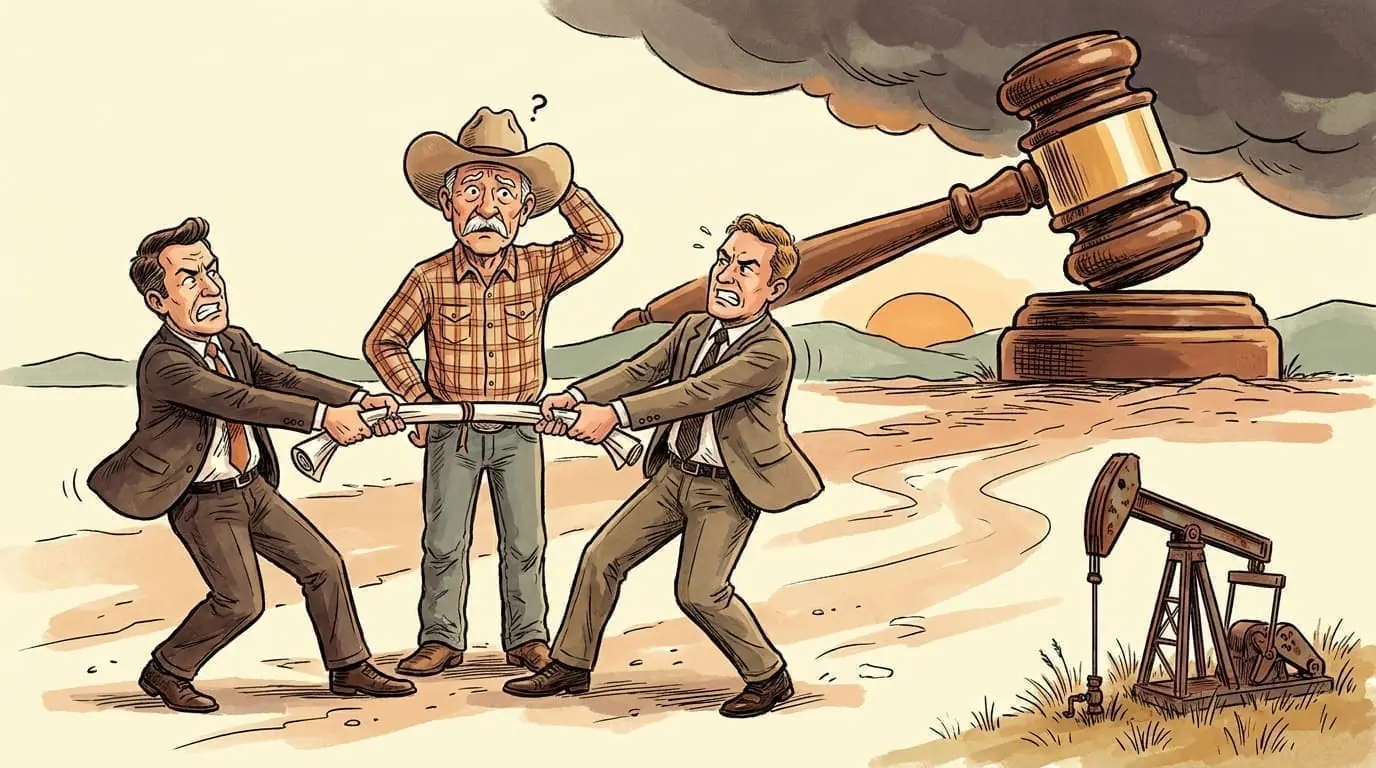
You stare out at the old pumpjack. It barely moves. Your family has owned this Texas land for generations, and for the last decade, the operator has done the absolute bare minimum to keep the lease alive. The royalty checks are an insult. You want them gone.
Then the phone rings. A landman from a rival oil company is on the line. They know your primary lease is about to expire, or they suspect that marginal well isn’t producing in paying quantities. They make an offer that sounds like a lifeline. They want you to sign a new lease that takes effect the exact second the old one dies. They promise a massive bonus check. They promise a modern 25% royalty rate instead of your great-grandfather’s 12.5%.
You sign the paperwork. You think you just fired a lazy operator and secured your family’s financial future.
What you likely just did was trigger a multi-year, scorched-earth legal war.
We talk to mineral owners every week who are trapped in this exact nightmare. They tried to do the right thing for their family. They wanted a better deal. Instead, their land is paralyzed, their royalties are frozen, and they are named as defendants in a lawsuit filed by a well-funded oil company.
Let me walk you through exactly how the Texas legal system turns a simple business decision into a trap, and how you can protect your family’s assets.
The Appeal of the Top Lease
When an existing lease is nearing its expiration date, or when a family is dealing with The “Zombie Lease” Problem: How Your Minerals Get Held Hostage by One Token Well, rival operators see an opportunity. They approach the mineral owner with a :top lease.
The concept is simple. A top lease is a new agreement that sits on top of the existing “bottom lease.” It only becomes active when the bottom lease legally expires or is terminated. For the mineral owner, it feels entirely risk-free. You get a signing bonus now, and if the old operator leaves, you get a much better deal going forward.
The rival oil company gets a strategic advantage. They lock up the acreage. They know exactly when the old lease expires, and they are ready to move rigs onto the property the next morning.
If everyone plays nice, it works beautifully. But oil companies fighting over Texas acreage rarely play nice. When the original operator finds out you signed a top lease, they almost never pack up their equipment and leave quietly. They fight. And they use your actions against you.
The Repudiation Doctrine: Hitting the Pause Button
Here is the legal mechanism that ruins the plan. It is called the :repudiation doctrine.
Texas courts have long held that an operator needs certainty to do their job. Drilling a well costs millions of dollars. An operator cannot safely spend that kind of money if the landowner is actively claiming the lease is dead or invalid.
If a landowner gives the operator “unqualified notice” that the lease is terminated, the courts allow the operator to hit the pause button on the lease clock. The expiration date stops mattering. The original operator can suspend their drilling plans, stop paying royalties, and take you to court. The lease is frozen in time until a judge decides who is right.
Signing a top lease and filing it in the county courthouse is often viewed by the original operator as an act of repudiation. They will argue that by signing a contract with a competitor, you actively obstructed their legal right to develop the minerals.
Let’s look at exactly how this plays out in the real world.
In a prominent 2016 Texas case, 502 Rippy Interests, LLC v. Nash, a family granted a top lease to a new company because the primary term of their base lease was about to expire. The primary term was set to end on January 18.
The original operator, Rippy Interests, did not want to lose the lease. Right before the deadline, they scrambled. They got a drilling permit. They hired contractors. They built a 2.88-acre well pad and a road. They spent about $849,000 in a matter of weeks to prove they were conducting operations.
On January 18, the exact day the lease was supposed to expire, the landowner locked the access gate. The landowner believed the lease was dead. The operator’s contractors cut the lock. The landowner called the police and reported the contractors for trespassing.
The operator immediately sued the landowner. They argued that locking the gate and calling the police was a clear repudiation of the lease.
The landowner and the new top-lessee tried to argue that the operator hadn’t done enough actual drilling to save the lease. They pointed to older Texas cases where simply driving a wooden stake into the ground wasn’t enough to hold a lease. But the court looked at the $849,000 spent and the heavy equipment on site and disagreed.
The court ruled that the operator was actively engaged in operations. More importantly, the court noted that the landowner’s actions—locking the gate and claiming the lease was expired—gave the operator the right to claim the repudiation defense. The lease was held in place. The family thought they were kicking out an operator. Instead, they bought themselves years of expensive litigation.
Slander of Title
The repudiation doctrine is just the defensive shield the operator uses to pause the clock. They also have an offensive weapon. They will often sue the mineral owner for :slander of title.
Slander of title means someone maliciously published a false statement that disparaged a property owner’s title, causing them financial loss. In the oil and gas world, the original operator will argue that your top lease is the false statement.
When you file a poorly worded top lease in the public records, it creates a cloud on the original operator’s title. If that operator was trying to sell their interest in the well to another company, the buyer will see your top lease and back out of the deal. The original operator will then sue you for the millions of dollars they lost when that sale fell through.
Legal strategy firms routinely advise operators on aggressive top leasing tactics, specifically noting how a top lease can be weaponized in court. The original operator knows you don’t have the funds to fight a drawn-out legal battle. They use the threat of massive financial damages to force you to back down.
The Financial Reality of the Standoff
This is where the math gets ugly for the family.
Once the lawsuit is filed, the original operator immediately places your royalty account in suspense. This means they stop paying you. The money generated from the existing well goes into a holding account. You cannot access it. The top lessee cannot access it. It just sits there.
These lawsuits routinely take three to five years to resolve. During that time, you are receiving absolutely zero income from the property.
Meanwhile, the legal bills mount. The new oil company that signed the top lease will often promise to cover your legal fees. They might even hire the lawyers for you. But you are still a named defendant. You still have to give depositions. You still have to worry about a judge ruling against you and holding you personally liable for slander of title damages.
We see the emotional toll this takes. Families who just wanted a fair market rate for their minerals end up arguing at the dinner table about legal strategy. Siblings blame each other for signing the paperwork. The land that was supposed to be a blessing becomes a source of immense anxiety.
It is a heavy burden to carry. It forces you to ask hard questions about the difference between holding Producing vs. Non-Producing Minerals when the production itself is locked behind a legal wall.
How to Build Legal Guardrails
If you are going to entertain a top lease offer, you cannot sign the standard paperwork the landman hands you. That document is designed to protect their company, not your family. You must have an experienced oil and gas attorney draft specific protective clauses.
First, the top lease must contain a strict non-obstruction clause. This explicitly states that the mineral owner is not challenging the validity of the bottom lease and will not interfere with the current operator’s activities.
Second, the top lease must be clearly drafted as a subordinate document. It must acknowledge that it only takes effect if and when the bottom lease terminates under its own terms, without any action or declaration by the mineral owner.
Third, you must refuse to sign any warranty of title in a top lease. You cannot guarantee to the new company that the land is free and clear, because the original operator will argue that you are legally declaring their bottom lease invalid.
Finally, you have to control your own behavior. You cannot lock gates. You cannot send angry emails demanding the operator get off your land. You cannot call the sheriff. Any aggressive action you take will be presented to a judge as evidence of repudiation.
Knowing Your Options
Dealing with a hostile operator and a complicated top lease scenario requires patience, capital, and a high tolerance for risk. Not every family has those resources. I genuinely don’t know many individuals who want to spend their retirement years reading court filings and giving depositions.
This is why some owners choose a different path entirely. When they realize their land is trapped by a bad operator, and they see the legal risks of signing a top lease, they decide to exit the situation.
Selling the mineral rights to a sophisticated buyer is often the cleanest way out. We step into situations like this frequently. A family office like ours has the legal team and the financial runway to fight these title battles. We understand the math. We know how to deal with operators who try to use the repudiation doctrine as a weapon.
When a family sells a contested asset, they transfer the legal headache to the buyer. The family receives a lump sum payment based on the actual value of the minerals, and they walk away from the conflict. The stress of the suspense account and the looming lawsuit becomes our problem, not theirs.
You have to decide what makes sense for your specific situation. There is no universally right answer. But making that decision requires understanding the actual risks on the table.
If you are currently reviewing a top lease offer, or if you are already stuck in a standoff with an operator who is using your actions against you, it is worth a conversation to see what your assets are actually worth on the open market. Having options is the best way to protect your family’s peace of mind.
:top-lease
A lease granted by a mineral owner while a valid existing lease is still in effect on the same property. It is designed to automatically become active the moment the older bottom lease expires or is legally terminated.
:repudiation-doctrine
A legal defense used by oil and gas operators. If a mineral owner wrongly claims a lease is terminated or actively blocks the operator from working, the court allows the operator to pause the lease’s expiration clock until the dispute is resolved.
:slander-of-title
A legal claim where one party accuses another of maliciously publishing false information that harms their property rights. Operators often sue mineral owners for this when a top lease is filed in the county records without proper legal wording, claiming it ruins their ability to sell or operate the lease.