
Spot oil prices and acquisition announcements change faster than title or geology. Use the live EIA series below for current pricing, then apply the tract-specific factors in our Texas mineral-rights guide and valuation guide instead of anchoring an offer to one headline price.
If you’ve kept half an eye on the markets lately, you know WTI crude is sitting pretty comfortably above $107 a barrel. At the same time, industrial demand for natural gas is shattering previous records—driven in part by the massive power needs of new data centers popping up across the state.
That kind of pricing creates a frenzy in the oil patch. Right now, large private exploration companies are testing the waters with asset sales worth upwards of $3 billion in the Delaware Basin alone.
But what do billion-dollar corporate buyouts and record commodity prices mean for a family that owns 40 acres of mineral rights in Texas?
A whole lot, actually. Here is why the current market is creating a unique window of opportunity for mineral owners.
The Rush to Consolidate Acreage
When oil prices surge, operators want to get rigs turning quickly to capture the upside. But modern oil and gas extraction isn’t like the old days of punching a vertical hole in the ground and hoping for a gusher. Today’s operators drill horizontal wells with laterals that stretch for miles.
To justify the massive cost of drilling horizontal wells, operators need large, contiguous blocks of land. If your family owns a small tract, an oil company likely cannot get a drilling permit from the Texas Railroad Commission just for your property.
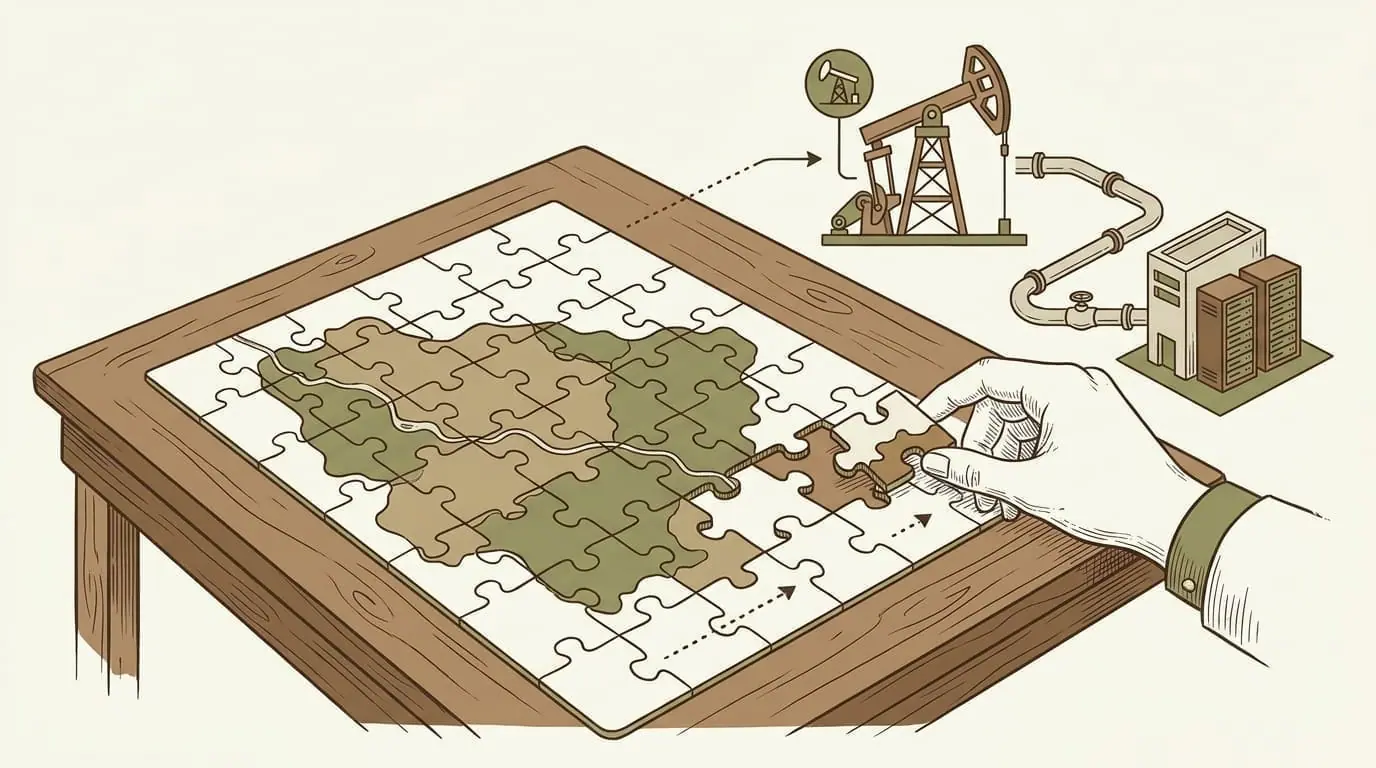
Instead, they have to combine your acreage with your neighbors’ land through a process called :pooling. By tying multiple smaller leases together, the operator forms a legally sized tract called a :proration unit. The longer the horizontal well they want to drill, the more acreage they need to assign to that well.
This is exactly why we are seeing billion-dollar acquisitions right now. Big operators are buying up smaller companies just to stitch together enough adjacent land to drill massive, highly profitable horizontal wells.
What This Means for Your Mineral Value
When operators are desperate to consolidate acreage and drill while oil is near $108, the value of the underlying minerals spikes.
If your minerals are unleased, you might be getting a mailbox full of aggressive lease offers. If you are already leased and producing, those royalty checks are looking better than they have in years.
However, dealing with pooling clauses, navigating field rules, and hoping an operator actually drills on your specific tract can take years of waiting. Oil prices are famously cyclical. What is at $107 today could easily drop back to $60 next year, taking the value of your family’s minerals down with it.
The Double Fraction Difference
A lot of Texas families look at the current market peaks and decide it’s the right time to take some chips off the table. Selling all or a portion of your mineral rights allows you to lock in today’s high valuations and turn a volatile asset into predictable, upfront cash.
At Double Fraction Minerals, we aren’t a massive, faceless corporation trying to bundle your land into a $3 billion Wall Street package. We are a Texas family office. We use our own capital, which means we cut out the middlemen and brokers to move fast.
Our philosophy is simple: Fair, Fast, and Family-Owned. We’ll look at your acreage, factor in today’s premium oil and gas prices, and give you a straight-shooting, competitive offer. No high-pressure sales tactics—just a transparent conversation about what your minerals are worth in today’s market.
If you are curious about what your mineral rights might bring in this high-priced environment, reach out. We’re always happy to talk Texas oil.
Do Not Capitalize a Temporary Price Forever
The price in this article’s title describes a dated market moment, not a standing assumption. Use the EIA series in the source list to verify the current spot price and label the date in any valuation. Buyers generally test multiple price cases because a mineral deed transfers a long-lived asset while commodity prices move daily.
Acquisition announcements also require scale discipline. An operator buying a large working-interest position, infrastructure or contiguous development block does not establish a per-acre price for a small royalty interest. The burden, lease rate, title, producing formations and remaining inventory are different. Use transactions as context only after adjusting for what actually changed hands.
If an offer rises with the market, ask which assumptions changed: current production, oil price, gas price, future wells, discount rate or title acreage. A written breakdown is more useful than a generic statement that “the Permian is hot.” It also lets the owner compare competing offers on the same interest.
:pooling
The contractual and legal process of combining multiple small mineral tracts into a single, larger unit. This allows oil and gas operators to meet state spacing regulations and drill horizontal wells that cross multiple property lines, with royalties shared proportionally among the tract owners.
:proration-unit
The specific amount of acreage assigned to a single well to secure a drilling permit from state regulators like the Texas Railroad Commission. The size of the unit dictates how much land is required to legally drain the reservoir and prevents operators from drilling wells too close together.