
WhiteHawk Minerals reported $111.8 million of new acquisitions and record production of 70.0 MMcfe/d for its first full quarter as a public company. On Thursday’s earnings call, CEO Daniel Herz explained the strategy driving that volume. Some of the largest drillers in Appalachia are partnering directly with WhiteHawk to buy the underlying minerals ahead of the drill bit.
Two days earlier, Devon Energy posted second-quarter profits of $1.9 billion on $7.4 billion in revenue. During the earnings call, CEO Clay Gaspar confirmed his team is analyzing its portfolio and is considering selling its Eagle Ford and Powder River operations for more than $4 billion. Devon plans to direct its capital almost entirely into its core Permian basin acreage.
Operators protect their cash flow today by securing the physical dirt before drilling, consolidating pipeline systems to move gas to market, and selling producing regions that lack massive scale. For a private family holding a lease, an operator who owns the gathering lines and partners with an institutional mineral buyer operates under different financial incentives than an operator who only drills and sells the gas.
Buying the minerals before the permit
A driller removes the private royalty burden from its well economics by partnering with a well-funded company like WhiteHawk to buy minerals early. An operator paying a 20 percent royalty to a private landowner keeps 80 percent of the revenue to pay out the well costs. When the operator or its dedicated financial partner buys those minerals outright before the rig arrives, the partnership retains the entire revenue stream.
Operators buying unleased minerals lease the dirt to themselves. This secures a complete revenue stream on that specific acreage without having to negotiate a lease bonus or a royalty percentage with a local family. Appalachia is heavily targeted for this strategy. The basin holds massive proven gas reserves but faces severe pipeline takeaway constraints. Institutional buyers sit on the minerals and collect revenue from existing production while waiting years for operators to drill the next multi-well pad.
The timeline for the family who keeps their minerals moves in the opposite direction. Operators are acquiring the dirt today but pacing the development of the wells slowly. The entire Marcellus and Utica region received exactly eight new drilling permits last week. Apex Energy took four, Expand Energy took two, and Ascent Resources and EOG Resources took one each. Pennsylvania issued two permits, Ohio issued six, and West Virginia recorded zero.
Operators are securing the acreage now to hold it until commodity prices justify the capital expense of putting steel in the ground. They are willing to wait. The private owner who leases their minerals and expects an immediate royalty check often ends up locked into a long-term holding pattern while the operator drills elsewhere.
Taking control of the pipelines
Operators are also buying the physical systems that move oil, gas, and liquids from the wellhead to the sales point. Mora Energy recently acquired about 200 miles of natural gas gathering pipeline, four compressor stations, an amine treating plant, and an acid gas injection well in the Midland basin. The company acquired the Tejon Treating system and the Quail system from Williams to establish a concentrated natural gas gathering and compression platform across six Texas counties.
The consolidation of pipe is happening across multiple basins. California Resources Corporation agreed to acquire Crimson Midstream Holdings for $63 million in cash. The deal expands the producer’s California midstream footprint by about 2,000 miles of pipeline infrastructure, adding a transportation capacity of up to 400,000 barrels per day. The acquired assets include the SoCal Pipeline Network, the IVEC Line, the San Pablo Bay Pipeline, and the KLM Pipeline. Company executives noted that reliable barrels command a heavy premium in a fragile global supply chain. Ownership of the physical delivery infrastructure is now a major financial asset.
When an operator or its direct affiliate owns the local :midstream infrastructure, the financial dynamic between the producer and the royalty owner changes. Operators routinely deduct gathering, compression, and treating costs from private royalty checks. If the operator controls the treating plant and the pipeline network, the cash deducted from your check goes to a subsidiary owned by that same operator.
A lease permitting standard post-production deductions gives the operator legal authority to charge you these costs. This integration is one reason you must carefully review how Texas operators deduct pipeline deficiency fees when negotiating a new agreement. If the operator owns the pipe, the gathering fee they charge themselves comes directly out of your gross production value. Many property owners discover that three words in your Texas lease give the operator broad authority to subtract these transport costs from the monthly payment.
Consolidating into the core
Major producers are strictly deciding which basins matter to their balance sheets and abandoning the rest. Devon acquired Coterra Energy earlier this year and immediately began evaluating a divestiture plan for its combined six-basin portfolio. The company intends to focus on its Permian acreage as its primary cash engine.
Devon achieved its $1.9 billion quarterly profit by managing its capital allocation. When operators reach these margins, they face intense pressure from institutional investors and activist firms to sell secondary projects. Analysts and activist firms are calling for Devon to sell its Marcellus assets, exactly as they did when Coterra was an independent company.
If you own minerals in the Eagle Ford or the Powder River basin, Devon is signaling its intent to sell its position to the highest bidder. A transaction of that magnitude means a new operator takes over the existing leases, the producing wells, and the future development schedule. The new operator brings a different timeline, new accounting software, and a separate legal interpretation of your lease language.
Institutional pressure explains why private mineral owners see their operators change hands so frequently. The public operator manages a complex financial portfolio rather than a simple drilling schedule. This sorting process leaves smaller operators running the secondary basins while massive public companies dominate the Permian and the core of Appalachia. A well in a non-core basin still produces oil and gas, but the company operating it might lack the capital budget to drill the next necessary offset well. The value of your remaining un-drilled acreage depends heavily on whether your operator has the cash to drill it.
Preparing for volatility on the Gulf Coast
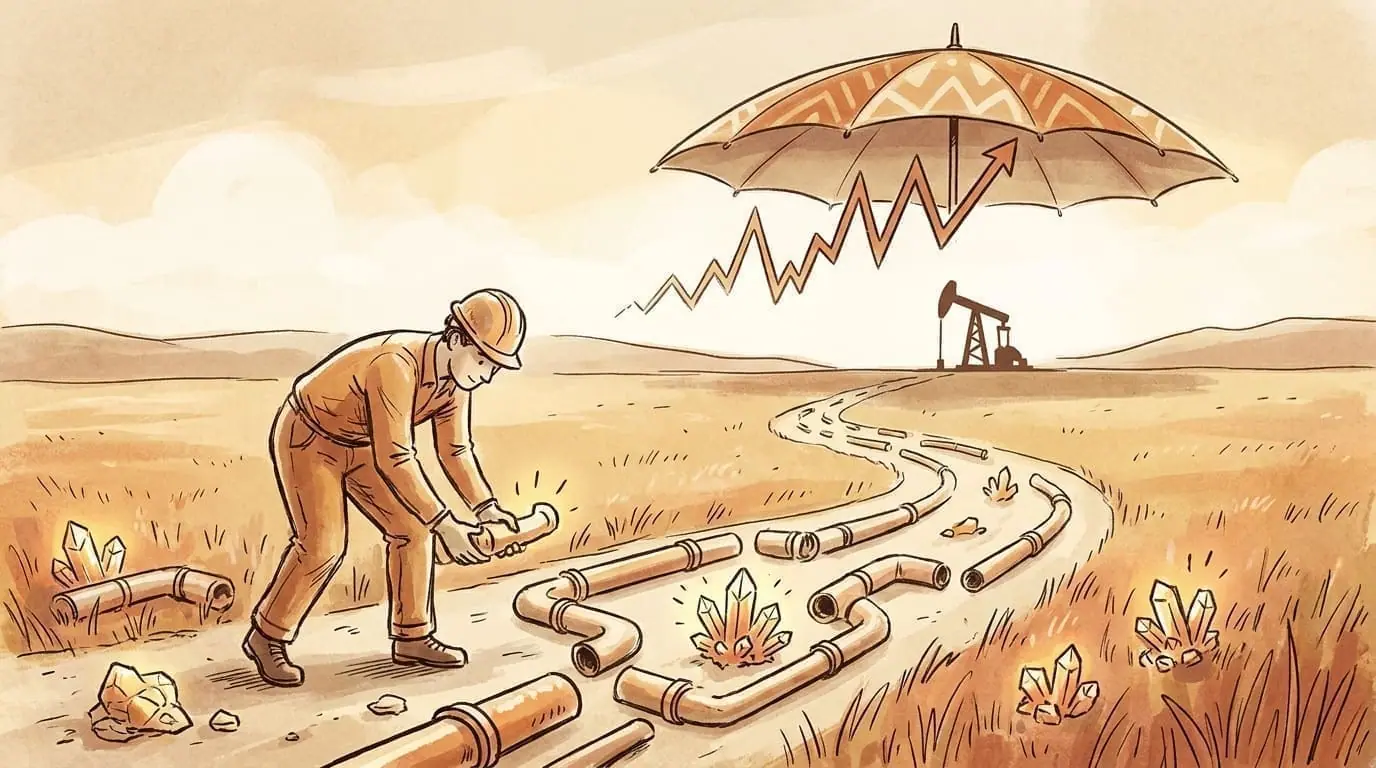
Companies buy minerals, control pipelines, and shed non-core basins to manage risk. Natural gas prices are highly unpredictable, and operators want physical assets to protect their corporate cash flow.
The United States natural gas market is increasingly tying itself to global pricing through export terminals. As more physical gas leaves the country via the Gulf Coast, domestic prices become heavily exposed to international demand shocks. Devon Energy executives are expecting Permian Basin natural gas price volatility to outlast the basin’s pipeline buildout. They predict the next severe wave of pricing dislocations will hit the Gulf Coast hubs because liquefied natural gas exports are currently outrunning the addition of local physical storage. To protect against this, Devon shields 70 percent of its own gas output through various hedging strategies and power plant deals that lock in specific pricing models like ERCOT West.
Private mineral owners rarely have access to commercial financial hedging. You sell your share of the gas at the daily physical market price. With the :forward curve remaining near $3 for natural gas, operators see limited immediate upside in the raw commodity price itself. They secure profit margins by controlling the entire supply chain instead of hoping for gas to hit five dollars. You carry the physical price risk while the operator hedges their position in the financial markets.
What to check on your paperwork
You need to know who holds your lease, who gathers the gas, and how the accounting is structured. Pull your most recent check stub and look at the deductions column. Compare the gross value of the gas produced to the net value you received.
If deductions consume a large percentage of the gross value, you are likely paying for the midstream infrastructure the operators are buying up. Run the math. If your well produced $4,000 in gross gas value and the operator deducted $1,200 for gathering, compression, and treating, you pay a 30 percent effective tax on your royalty to move the gas through their pipe.
Check the name of the operator paying you. If you own minerals in the Eagle Ford, the Powder River, or the fringe counties of the Marcellus, your current operator might be preparing to sell their :working interest to a different company. An operator looking to exit a basin rarely invests capital in new drilling programs right before they sell.
Read the correspondence you receive in the mail. If a company approaches you to buy your minerals, they might be partnering directly with the operator who plans to drill the unit. They often know the permit is coming before the state officially publishes the document.
Evaluating your long-term strategy
These industry developments do not mean you have to sell your minerals simply because operators are vertically integrating their businesses. A producing well continues to pay royalties regardless of who owns the gathering system or whether the public operator sells the entire field to a competitor.
There is no need to panic about Devon shedding secondary assets or WhiteHawk buying ahead of the drill bit. The physical oil and gas remain trapped in the rock, and a valid recorded lease requires the operator to pay you for your proportional share of the production.
The public numbers show that capital is moving toward midstream infrastructure and core tier-one acreage. You can choose to keep your property and collect the monthly revenue, provided you understand the specific deductions hitting your statement. Selling is one option if you prefer to avoid the deduction math and the constant operator turnover. Holding long term remains a completely viable strategy for family land.
To understand the current value of your acreage, you can request a free mineral rights valuation to see the real numbers for your property and review the math.
:midstream-infrastructure
The pipelines, compressor stations, and processing plants that transport raw oil and gas from the wellhead to the final downstream market. These facilities clean, compress, and move the product so it can be sold to commercial buyers.
:working-interest
The ownership stake in an oil and gas lease that grants the right to drill and produce, while also bearing all the financial costs of exploration, drilling, and ongoing operations.
:forward-curve
A financial forecasting tool that charts the agreed-upon prices at which buyers and sellers are willing to trade a commodity like natural gas for delivery at various specific dates in the future.