
Devon Energy reported a $1.9 billion second-quarter profit last week. CEO Clay Gaspar indicated the company is evaluating its portfolio. Following the acquisition of Coterra Energy in May, Devon is fielding calls to sell assets. The operator generated $7.4 billion in quarterly revenues and plans to base the operations of the combined company around its position in the Permian basin.
Bloomberg reported Devon might sell its Eagle Ford and Powder River operations for more than $4 billion. Activist investor Kimmeridge also demanded the sale of the Marcellus basin assets. Devon shares fell more than 4 percent to $42.09 following the earnings call when the company did not announce immediate asset sales.
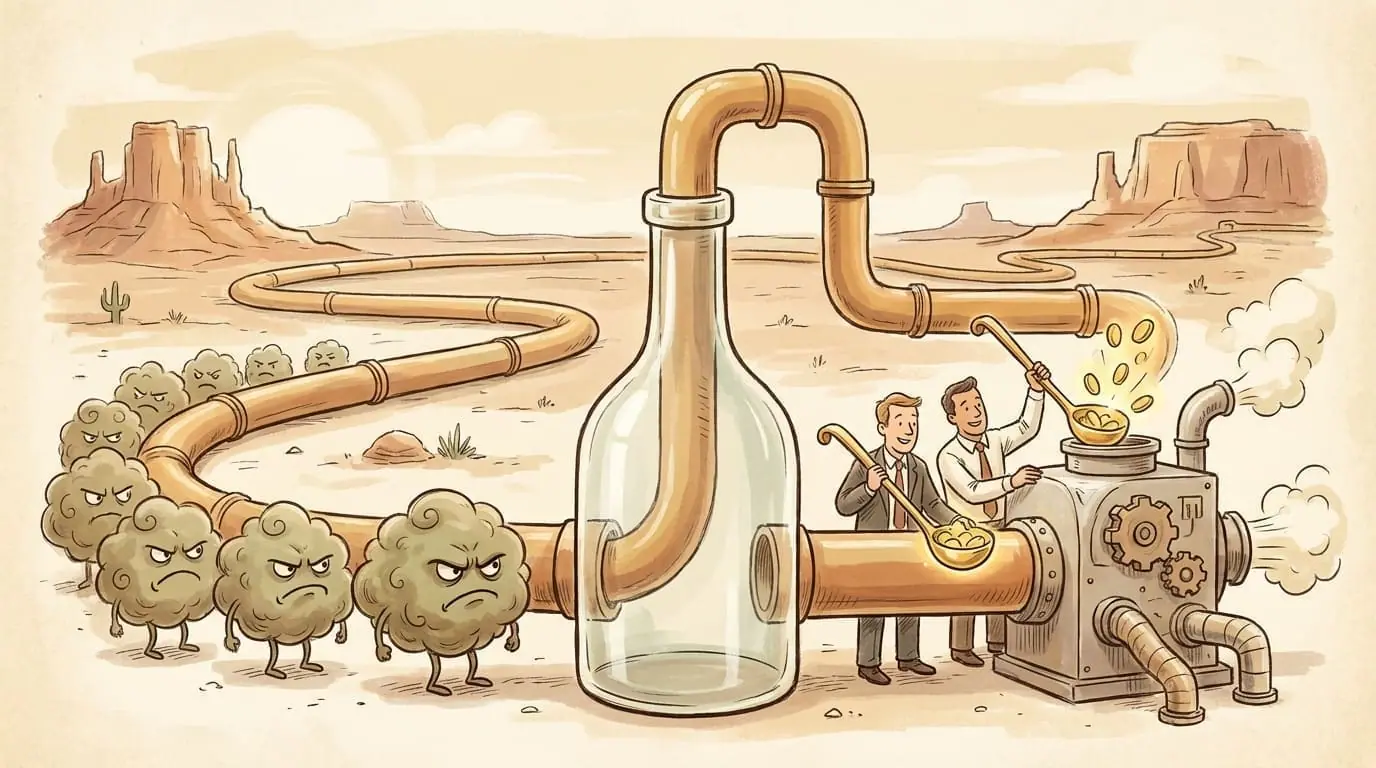
Gaspar told investors the company is reviewing its six-basin portfolio amid high demand for acreage. Public operators are currently directing capital away from peripheral basins to fund operations in West Texas. Transporting product out of the Permian basin requires large investments in midstream infrastructure. Operating in six separate basins means a company spreads its budget across multiple regulatory regimes and duplicate midstream contracts. Focusing capital in West Texas limits those administrative redundancies, but it alters the development timeline for mineral owners in the remaining basins.
The midstream hurdle in West Texas
While Devon considers shedding assets outside the Permian, midstream companies are buying and expanding West Texas infrastructure. Targa Resources announced Permian volumes reached a record 7.2 Bcf/d during the second quarter. Waha January forward prices rose above $3.00, and midstream operators are securing treating capacity to process the incoming volume.
Mora Energy closed two acquisitions to build a natural gas gathering and treating platform in the Midland basin. Mora acquired Tejon Treating and Carbon Solutions from Bayswater Exploration and Production, and it purchased the Quail system from Williams. Mora now operates 200 miles of natural gas gathering pipeline, four compressor stations, an :amine treating plant, and an acid gas injection well across Andrews, Martin, Howard, Borden, Scurry, and Mitchell counties in Texas. Mora CEO Elliot Gerson described the acquisitions as a return to owning and operating midstream infrastructure in the Permian basin.
These midstream purchases point to physical constraints in the Permian basin. Natural gas prices at the Waha hub improved recently, averaging $1.64 per MMBtu in July and holding over $2.00 in August as new pipeline capacity came online. Moving gas out of West Texas requires volume capacity in the pipes, but the product also must meet chemical specifications before interstate pipelines accept it.
Why gas quality controls the market
Wyoming Interstate Company posted a notice on August 10 regarding warnings from downstream operators in the Cheyenne area. WIC was delivering gas with carbon dioxide in excess of its 2% by volume tariff specifications. High carbon dioxide causes equipment failure and pipeline corrosion. Because of this violation, Colorado Interstate Gas curtailed flows at the Bowie and Flying Hawk interconnects.
Daily scheduled volumes at the Bowie interconnect fell 27 percent from 297,522 Dth on August 10 to 217,837 Dth on August 11. This drop reduced the design capacity utilization at Bowie from 55 percent to 35 percent. Regional prices responded over the next two trade days. The Cheyenne Hub climbed 12.5 cents, and Colorado Interstate Gas prices rose 11.0 cents before receipts began increasing again at the interconnects.
The 2025 Valley Crossing Pipeline curtailments involved a similar issue. Incoming gas from the Whistler and Tennessee Gas Pipeline systems failed to meet minimum heating value specifications. Valley Crossing capped Whistler deliveries at 800,000 Dth per day and cut Tennessee deliveries to zero.
Midstream operators like Mora are purchasing amine treating plants to handle the volume of :associated gas coming out of Permian oil wells. Associated gas often contains high levels of carbon dioxide and hydrogen sulfide. Operators use amine treating plants to strip these impurities out of the gas stream, and they use acid gas injection wells to pump the waste byproducts deep underground. If the gas fails the tariff specification, pipelines reject it regardless of available capacity. When deliveries drop, local prices fall.
How operators adapt in California and Appalachia
Operators outside the Permian are adjusting to the concentration of capital in West Texas. California Resources Corporation agreed to acquire Crimson Midstream for $63 million in cash. The purchase adds 2,000 miles of pipeline infrastructure with a transportation capacity of up to 400,000 barrels per day. The assets include the SoCal Pipeline Network, the IVEC Line, the San Pablo Bay Pipeline, and the KLM Pipeline. CRC also recently acquired the Line 100 system, a 118-mile crude oil pipeline with 60,000 barrels per day of capacity and 1 million barrels of storage.
CEO Francisco Leon told investors that expanding midstream operations follows the company acquisitions of Aera and Berry. Leon noted the California energy market is experiencing a higher rig count and oil production that feeds pipeline systems. Refineries are also investing in local infrastructure. Instead of paying third-party processors, CRC is buying infrastructure to capture the transportation margins. The Permian basin operates differently, as the volume of gas requires dedicated third-party midstream companies to build and manage the treating plants.
In Appalachia, the Marcellus and Utica region received 8 new drilling permits between August 3 and August 9. Apex Energy took four permits, Expand Energy took two, Ascent Resources took one, and EOG Resources took one. West Virginia received zero new permits during that period. Regional rig counts remain flat at 35, while the Haynesville basin count stands at 59 rigs. Capital is tighter in the gas-heavy regions because the broader market favors West Texas oil.
To fund development, operators are forming external financial structures. WhiteHawk Minerals filed its first quarterly report as a public company. The report listed $111.8 million in new acquisitions, a $2.00 per share dividend, and record production of 70.0 MMcfe/d.
During the earnings call, CEO Daniel Herz said large drillers in Appalachia are partnering with WhiteHawk to buy minerals ahead of the drill bit. This arrangement mitigates operator capital constraints. Operators with a set annual budget prefer to spend money paying rig crews to drill rather than paying landowners for leases. Instead of the operator buying the lease or the minerals directly, a third-party mineral company like WhiteHawk buys the ground on the operator’s behalf, holds the asset, and coordinates development. WhiteHawk secures a permanent royalty interest, and the operator drills the well without using its own balance sheet for land acquisition.
What to check on your paperwork
If you own minerals in a basin that public companies treat as a secondary priority, such as the Eagle Ford or the Marcellus, your operator might assign your lease to a smaller private company. You should check your lease for an assignment clause. Most standard leases allow the operator to sell the lease to another company without asking permission. If Devon sells its Marcellus assets, the new buyer takes over the obligations and the payment schedule. When a new operator takes over, they must rebuild the division orders. This transition period often causes delayed royalty payments while the new accounting department verifies title records.
If you own minerals in the Permian basin, gas quality issues will appear on your check stub. When gas requires processing to remove carbon dioxide, operators pass the treating costs down to the royalty owner. Look for line items labeled “treating,” “amine,” “CO2 removal,” or “processing.” These costs can shrink your royalty checks during months when gas prices fall. The treating cost is a fixed physical expense. If processing costs $0.60 per Mcf and the gas sells for $1.00 per Mcf, the operator deducts the $0.60. This leaves you with $0.40 before taxes. If the gas price drops to $0.50, the $0.60 treating cost consumes the entire value, resulting in a gas check of zero.
When pipelines curtail volume because gas fails to meet tariff specifications, the financial impact extends further. Your operator might owe the pipeline for reserved space they could not use. Interstate pipelines charge demand fees to reserve capacity. If the fee is $0.50 per Dth, the operator owes that money whether they move gas or not. When a pipeline rejects gas for high carbon dioxide, the operator receives no revenue but still owes the demand fee. In some cases, operators deduct pipeline deficiency fees from the revenue they pay to mineral owners on the oil side of the ledger. Reviewing your statement for unfamiliar midstream deductions is the only way to know what the operator is charging you.
Evaluating asset sales
A public operator deciding to sell a position does not mean the acreage is poor, and it does not indicate development is ending.
When a company like Devon explores a $4 billion divestiture, it is an administrative decision about its balance sheet. Smaller operators buying those assets often drill the acreage more aggressively because they do not have a competing West Texas division consuming the drilling budget. Private operators buying non-core assets usually acquire them specifically to drill them.
Low permit counts in a single week in Appalachia do not mean the basin is empty. The Marcellus remains a highly productive gas field. Operators partnering with mineral buyers demonstrates how companies fund acquisitions when they prefer to spend their internal capital on drilling. The minerals hold their physical capacity, but the timeline for getting a well drilled changes under a new operator.
These corporate shifts factor into the financial considerations of holding your land. Selling is one valid option among several. Whether you hold your minerals or sell them, understanding how operators allocate capital helps you evaluate your position.
If you want to know what your specific decimal interest is worth in the current market, we offer free valuations with no fees. You can request a mineral rights valuation to assess your property.
:amine-treating
A processing method that uses chemical solvents to remove carbon dioxide and hydrogen sulfide from raw natural gas. Operators use this process to clean the gas until it meets the chemical requirements of interstate pipelines.
:associated-gas
Natural gas that comes out of a well drilled primarily for oil. Because the operator targets the liquid oil, the gas is a byproduct and often contains impurities that require midstream processing before sale.