Texas Receivership Leases for Missing Mineral Owners
When operators can't find missing mineral owners, Texas law allows a county judge to sign a lease on their behalf. Here is how the receivership process works.
Legal
Owner research · title · valuation
34 articles filed under Selling Guide.
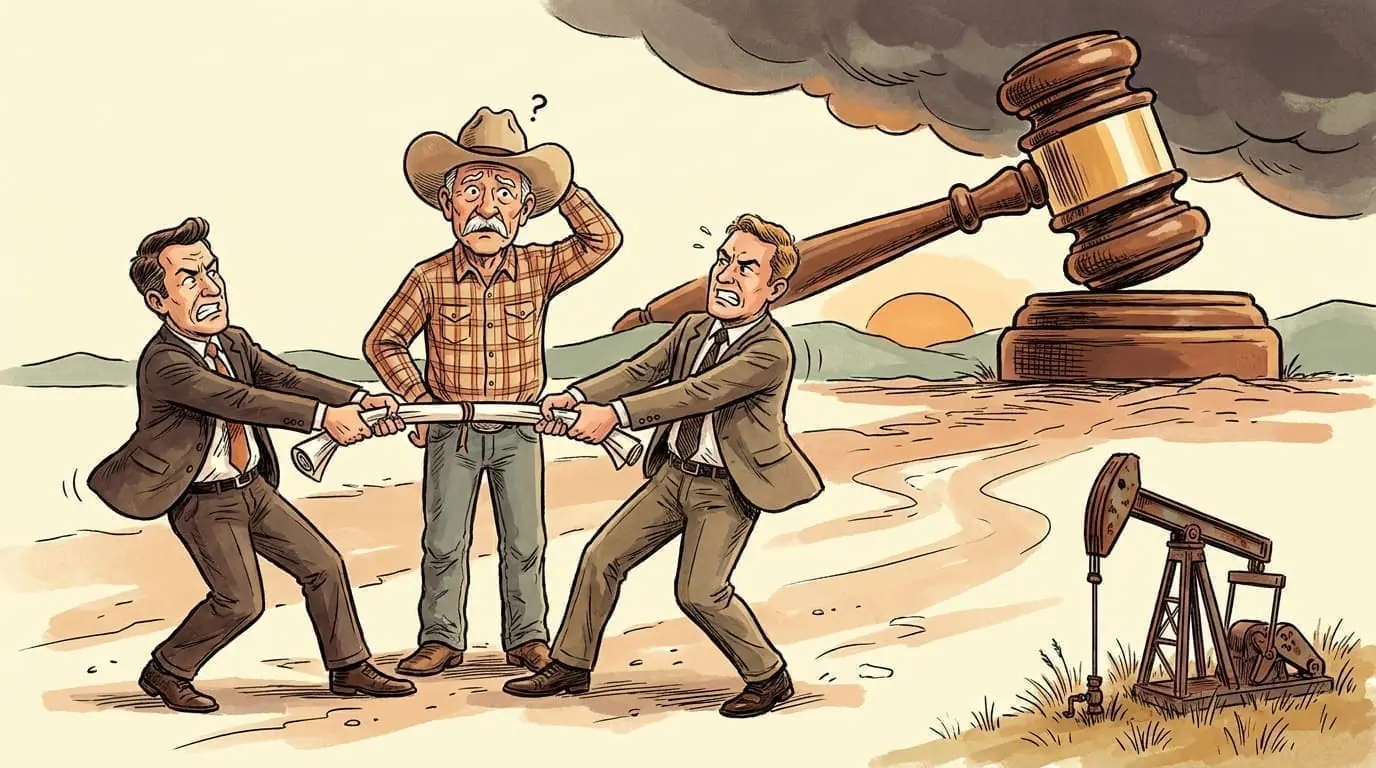
Signing a top lease feels like a great way to escape a bad operator. But without strict legal guardrails, it often traps your family in a massive title lawsuit.
When operators can't find missing mineral owners, Texas law allows a county judge to sign a lease on their behalf. Here is how the receivership process works.
In Mississippi, ignoring a pooling notice doesn't block the well. It turns your royalties into a massive cost-recovery account for the operator.
Ignoring a lease offer in eastern Montana won't stop the drill bit. Here is how Montana's forced pooling laws turn your silence into a 200% penalty.
Refusing a bad oil and gas lease in Ohio doesn't protect your minerals. It just gives the state the power to force you into a drilling unit on their terms.
California lawmakers are handing cities the power to ban oil production. If you own royalties under Los Angeles, your asset has a rigid expiration date.
How the PA Supreme Court's Briggs decision made holding out a dangerous game for unleased mineral owners.
How the executive right holder in Texas can sign the mineral lease, keep the bonus, and drag you along for the ride.
Why your 'private' West Texas minerals might actually belong to the State—and what the Relinquishment Act means for your family's land.
A quirky Texas title rule can automatically erase the minerals you thought your family reserved decades ago. Here is how the math works.
Montana law doesn't just ask operators to pay royalties on time. It sets strict deadlines, imposes heavy interest, and demands line-item check stubs.
When an operator drills across your property line and asks for permission later, your leverage vanishes. Here is the reality of Texas PSA wells.